ESRS 2 General information
Basis for preparation
General basis for preparation
Reporting period and scope of consolidation
The sustainability statements cover the period from January 1 to December 31, 2025, which is SoftwareOne’s financial year. The combination of SoftwareOne and Crayon was concluded on July 3, 2025. All data is reported as a combined company, with references made to SoftwareOne representing both entities unless Crayon is specifically mentioned.
To reflect the fact that the combination took place halfway through the year, we applied the following principles in collecting the data underlying the sustainability statements:
- SoftwareOne data: full financial year from January 1 to December 31, 2025.
- Crayon data: second half of the financial year from July 1 to December 31, 2025.
The consolidated ESG data includes the parent company SoftwareOne Holding AG and its affiliated entities and subsidiaries in 74 countries worldwide. This is consistent with our IFRS-compliant financial reporting, which is also carried out on a consolidated group basis. No entities have been excluded. Our financial reporting covers the same time periods as outlined above for sustainability reporting.
Value chain coverage
The sustainability statements cover our own operations as well as our upstream and downstream value chain. The impacts, risks, and opportunities (IROs) identified through our double materiality assessment likewise cover the entire value chain.
Detailed information about our policies can be found in the individual topical standards. Selected policies and actions extend to our value chain, where relevant.
For additional information, please refer to the section Our value chain in ESRS 2.
Disclosure exemptions
SoftwareOne has not utilized the disclosure exemptions under articles 19(a)(3) and 29(a)(3) of Directive 2013/34/EU. These exemptions apply to disclosures of impending developments or matters in the course of negotiation.
Phase-in provisions
SoftwareOne has selectively adopted ESRS phase-in options where they are available in the respective topical standards. These sustainability matters are not reported. Consequently, we do not report on E1-9, S1–7, S1–11 or S1–13.
Disclosures in relation to specific circumstances
Definitions of time horizons
Our DMA, which informs our reporting, used the same definitions of short-, medium-, and long-term as the ESRS. These ESRS-aligned definitions of time horizons are reflected in our IRO descriptions in the respective topical standards in the sustainability statements. Elsewhere, specific years are generally used for clarity.
Pursuant to ESRS 1 section 6.4, the time horizons are:
- Short term: one year. ESRS defines the short term as SoftwareOne’s reporting period in line with our financial statements.
- Medium term: two to five years. ESRS defines the medium term as from the end of SoftwareOne’s reporting period up to five years.
- Long term: more than 5 years as per the ESRS definition.
Estimates and uncertainty (including value chain estimation)
Generally, metrics related to our own operations are based on primary data, while value chain metrics are typically estimated, leading to a greater degree of measurement uncertainty. SoftwareOne has described its methodology in the respective topical standards, indicating instances where estimates have been utilized in our metrics and planned measures to improve data accuracy.
Some ESG data points are based on estimates and assessments as indicated below:
- Greenhouse gas (GHG) emissions: estimates were used to calculate parts of our Scope 1, 2, and 3 emissions, resulting in some uncertainty due to data challenges. For additional information, please refer to the section E1 Climate change.
- S1 Own workforce: estimates were used to calculate the remuneration ratio, gender pay gap, and average training hours per employee. For additional information, please refer to the section S1 Own workforce.
Changes in data preparation and presentation
Where ESRS-mandated qualitative and quantitative data points are reported, we treat them all as first-time reporting by SoftwareOne. This applies where:
- ESRS-mandated data points are completely new and have not previously been reported by us.
- Similar data points previously reported by us now have different definitions and boundaries under ESRS. We have brought our definitions into accordance with ESRS and have not made any historical references.
Comparative data from previous years is not included because it pre-dated SoftwareOne’s combination with Crayon. Like-for-like comparisons would therefore not be useful and meaningful as intended under the ESRS. We have prioritized the 2025 reporting period in the respective topical standards.
Reporting frameworks and standards
The sustainability statements are prepared in compliance with the CSRD as implemented in the Norwegian Accounting Act section 2–3 (CSRD) as well as the European Sustainability Reporting Standards (ESRS) issued by the European Financial Reporting Advisory Group (EFRAG). Four topical standards covered under the Environment, Social, and Governance sections have been assessed as material according to our Double materiality assessment (DMA).
Our entity-specific disclosures within the respective topical standards reflect relevant qualitative and quantitative data points aligned with the corresponding material impacts, risks, and opportunities. Entity-specific disclosures are included in the topical standards S1 Own workforce, S2 Workers in the value chain, and G1 Business conduct.
All greenhouse gas data points (GHG Scopes 1, 2, and 3) are reported based on ESRS.
We have also assessed Swiss sustainability reporting requirements stipulated in article 964 (a–c) of the Swiss Code of Obligations and in the Swiss Ordinance on Climate Disclosures. Due to complete overlaps with CSRD and ESRS, Swiss requirements are met through compliance with CSRD and ESRS. There are therefore no compliance gaps, and Swiss and Norwegian regulatory requirements are fully met.
Please refer to the list of ESRS disclosure requirements at the end of the sustainability statements.
Disclosures stemming from other legislation or generally accepted sustainability reporting pronouncements
Our reporting in compliance with the EU Taxonomy Regulation is in the environment section of the sustainability statements. Our Taxonomy reporting helps us to fulfill our ESRS obligations.
SoftwareOne’s previous reporting under the Global Reporting Initiative (GRI) Standards and the Task Force on Climate-related Financial Disclosures (TCFD) Index has been discontinued in deference to the mandatory ESRS disclosures.
Additionally, a list of the datapoints derived from other EU legislation listed in Appendix B of ESRS 2 is available for review at the end of the sustainability statements.
Incorporation by reference
To streamline reporting and avoid repetition, certain ESRS 2 disclosures have been incorporated by reference throughout the integrated annual report. More specifically, we have chosen to incorporate the following disclosures from ESRS 2:
ESRS 2 disclosure requirement | Incorporation by reference Location of information in integrated annual report | Page number | ||
GOV-1 21 (c) | Experience of administrative, management and supervisory bodies relevant to the sectors, products and geographic locations of the undertaking | Corporate governance report | 172 | |
Corporate governance report | 155 | |||
GOV-2 26 (c) | A list of the material impacts, risks and opportunities addressed by the administrative, management and supervisory bodies, or their relevant committees during the reporting period | Corporate governance report | 169–170 | |
Moreover, we have utilized cross-referencing as follows within the sustainability statements:
ESRS 2 disclosure requirement | Cross-reference within the sustainability statements Location of information in integrated annual report | Page number | ||
GOV-4 | Statement on due diligence | Sustainability statements: Social | 82 | |
104 | ||||
108 | ||||
Sustainability statements: Governance | 116 | |||
• Overall approach to business conduct and corporate culture | 116 | |||
122 | ||||
SBM-1 40 (a) (iii) | Strategy, business model and value chain | Sustainability statements: Social | 82 | |
Number of employees by geographic area | 83 | |||
Sustainability governance
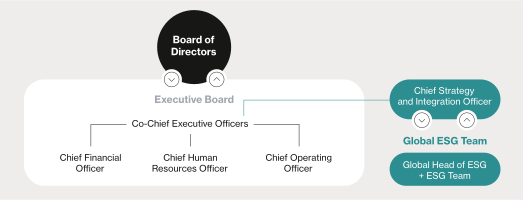
An overview of our sustainability governance model in 2025 is illustrated below:
Board of Directors
Board of Directors composition and diversity
SoftwareOne’s Board of Directors (BoD) comprises seven members, all of whom are elected by shareholders. No BoD members are elected by employees (i.e., there are no employee representatives). All seven BoD members are non-executive.
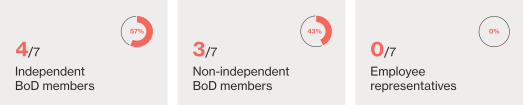
In 2025, one out of the seven BoD members was a woman (14%). The age of BoD members was diverse, ranging from 48 years old to 68 years old, with an average age of 59 years. The seven BoD members together represented two different nationalities, and their educational backgrounds were in law, economics, and business administration.
Board ESG competencies and access to ESG expertise
BoD members have ESG experience through executive and BoD positions in other companies. In summary, the BoD’s collective ESG competencies span ESG reporting and limited assurance and governance or business conduct topics (e.g., BoD structure and independence, risk management, compliance, executive remuneration). The BoD’s ESG competencies are therefore broadly aligned with SoftwareOne’s material impacts, risks, and opportunities described in the Double materiality assessment section in ESRS 2.
To further supplement the BoD’s knowledge in areas related to our material impacts, risks, and opportunities and beyond, the BoD has access to internal ESG expertise in the form of the Global ESG Team as well as other corporate functions and subject matter experts. External consultants may also be conferred with at the discretion of the BoD.
We conducted internal training in 2025 for our BoD on business conduct matters focusing on the issues of insider trading prevention and anti-corruption. The training was led by our Chief Legal Officer. In addition, some BoD members have historically previously completed external ESG-related training courses independently.
Each year, the BoD evaluates its qualifications, experience and performance, presenting this evaluation to the Nomination and Compensation Committee. ESG is part of the broad set of competencies required of our BoD.
Board members’ individual professional backgrounds and ESG competencies are described in more detail in the Individual members of the Board of Directors section in the Corporate governance report.
Executive Board
Executive Board composition and diversity
In 2025, SoftwareOne had a five-member Executive Board (EB) which consisted of our:
- Two Co-Chief Executive Officers
- Chief Financial Officer1)
- Chief Human Resources Officer
- Chief Operating Officer
1)A new Chief Financial Officer was appointed in June 2025 (Hanspeter Schraner) succeeding the previous role holder, Rodolfo Savitzky.
Together, the EB made all major strategic and operational decisions in the reporting period, extending to those involving ESG. Additional information about our EB’s overall responsibilities is provided in the Responsibilities section of the Corporate governance report.
In 2025, two out of the total five executives were female (40%). Our five EB members had educational backgrounds in business administration and human resources, and their professional experience encompassed the IT, engineering, and manufacturing industries.
EB’s ESG competencies and access to ESG expertise
The EB’s combined ESG competencies span diversity, equity, inclusion, and belonging (DEIB), responsible AI, and business conduct matters (e.g., ethics and compliance). Thus, the EB’s ESG competencies are broadly aligned with SoftwareOne’s material impacts, risks, and opportunities described in the Double materiality assessment section in ESRS 2. EB members have ESG experience through their duties within SoftwareOne, and by reason of their executive and board positions in other companies.
The EB’s individual professional backgrounds and ESG competencies are described in more detail in the Individual members of the Executive Board section in the Corporate governance report.
In 2025, all EB members completed an environment-oriented training course developed by the Global ESG Team on carbon reduction measures. EB members also participated in an internal business conduct training course on insider trading prevention and anti-corruption in 2025. The training was led by the Chief Legal Officer and was a refresher focusing on new requirements due to SoftwareOne’s dual public listing in Oslo. Other topics covered included notification processes and value thresholds.
The EB was included in five training courses offered by the Compliance Team that were mandatory for the entire SoftwareOne workforce in 2025. Subjects covered were our Code of Conduct, prevention of workplace harassment, cybersecurity, the EU General Data Protection Regulation, and ethical AI.
Throughout the reporting period, the EB had access to supplementary ESG expertise through the Global ESG Team, as well as other corporate functions and subject matter experts within SoftwareOne. There was also the option to call in external consultants, typically in coordination with the Global ESG Team. The EB was therefore well-equipped to consider ESG topics in the reporting period, including those related to our material impacts, risks, and opportunities.
EB’s ESG-related remuneration and incentives
The remuneration of SoftwareOne’s EB comprises fixed elements (e.g., base salary, pension and other benefits) and variable elements (e.g., short-term incentive plan and long-term incentive plan). The payout or vesting of variable compensation elements is subject to performance, including SoftwareOne’s ESG progress.
The performance period of the short-term incentive (STI) plan is one year. In 2025, SoftwareOne’s STI plan included six annual ESG goals covering the environmental, social, and governance pillars. Altogether, the six ESG goals represented 10% of the EB’s short-term incentive plan.
In 2025, the ESG goals included role modelling and tone from the top by executive leadership. For example, the EB communicated on upholding integrity and ethical conduct in all business dealings. We also made progress in other ESG areas, such as increasing the number of Women in Tech groups within our organization – these employee resource groups are designed to increase female representation in the IT industry through knowledge sharing, mentorship, and networking opportunities. Our 2025 ESG goals are not linked to metrics reported in the sustainability statements.
The EB’s performance against ESG goals is evaluated at the end of each year by the board-level Nomination and Compensation Committee (NCC) as part of a broader remuneration review. Final approval is given by the BoD. The EB’s ESG performance achievement was assessed as 103% in 2025.
At the beginning of each financial year, the NCC prepares a proposal for the BoD on new ESG goals to embed into the EB’s updated STI plan. Following BoD approval of the ESG goals and the STI plan, the shareholders of SoftwareOne vote on total compensation and the Compensation report at the Annual General Meeting.
Additional information about the EB’s ESG-related remuneration and incentives, ESG performance achievement under the STI plan, as well as SoftwareOne’s compensation governance structure, is available in the Compensation report.
Close coordination between our BoD and EB on sustainability matters
ESG mandates of the EB and BoD
We updated the SoftwareOne Delegation of Authority in 2025 to formalize and codify the ESG mandates of the EB and BoD, with an emphasis on review and approval of our ESG strategy and sustainability reporting. We anticipate further policy revisions to the Delegation of Authority and the SoftwareOne Organizational Regulations to be approved in 2026, including but not limited to responsibility for sustainability matters.
EB and BoD sustainability commitment and responsibilities
The full BoD plays a lead role on ESG matters as there is no delegation of ESG responsibilities to BoD committees. We take the view that given their transvers nature, sustainability matters are best addressed by the full BoD, which is SoftwareOne’s principal governing body.
The EB and BoD are both instrumental in the integration of ESG into SoftwareOne’s business strategy and in overseeing our progress in implementing ESG initiatives.
In 2025, day-to-day responsibility for ESG lay with the Chief Strategy & Integration Officer who reports to the Co-Chief Executive Officer. ESG is a stand-alone function that is part of SoftwareOne’s Strategy & Integration structure. The Global ESG Team is led by the Global Head of ESG who defines and spearheads SoftwareOne’s global ESG priorities, including ESG reporting and preparing the double materiality assessment.
Critical decisions and concerns about ESG are escalated to SoftwareOne’s EB, and where relevant and appropriate, to SoftwareOne’s full BoD. The Chief Strategy & Integration Officer and Global Head of ESG lead engagement with the EB and BoD on ESG matters.
Following SoftwareOne’s combination with Crayon and reconstitution of the BoD and the EB, in the second half of 2025 the Global ESG Team provided periodic updates to the BoD and EB, either by joining the meetings or providing written submissions.
These updates included informing the BoD and EB about:
- ESG regulatory developments and their implications for SoftwareOne.
- The DMA and its relevance for ESG reporting and the planned ESG strategy.
- Planned ESG initiatives as a combined company, including pathways for integration and defining a new target operating model.
In 2025, the BoD and EB both approved:
- The 2025 Annual Report (this document) prior to publication.
- The DMA, which underpins the ESG disclosures in the sustainability statements.
The material impacts, risks, and opportunities considered by SoftwareOne’s BoD and EB in 2025 are covered in detail in the following sections of the annual report:
- Double materiality assessment section in ESRS 2, where we list our 27 material impacts, risks, and opportunities resulting from the DMA.
- The Risk management section of the Corporate governance report describes the types of risks monitored by SoftwareOne.
Integration of sustainability into strategy and risk management
The BoD and EB take a deliberate approach to considering sustainability impacts, risks, and opportunities when overseeing strategy, decisions on major transactions, and risk management processes.
SoftwareOne’s practice of incorporating ESG goals into the EB’s short-term incentive plan incentivizes the EB to be more proactive about synergies between sustainability and commercial matters than might otherwise be the case.
Our enterprise risk management system places equal weighting on ESG risks relative to other types of risks. ESG risks are categorized as strategic risks. Risk assessment tools are based on the three-line defense model and include internal controls built into daily processes, internal audits, and a formal enterprise risk assessment. The 2025 update to SoftwareOne’s enterprise risk register, approved by the BoD and the EB, contained the findings from the combined company’s DMA. Opportunities were identified to further align the DMA and enterprise risk management methodologies and interventions in the future.
Additional information about our enterprise risk management framework and its inclusion of ESG is available in the Corporate governance report.
To illustrate the tensions and trade-offs inherent in strategic decision-making, the integration of the ESG functions of Crayon and SoftwareOne in 2025 was deliberately accelerated by the EB to facilitate preparations for the identification of material impacts, risks, and opportunities and other facets of CSRD-compliant sustainability reporting. SoftwareOne had not previously been subject to CSRD/ESRS. The trade-off was the postponement of a newly designed ESG strategy for the combined company until 2026.
Despite the short-term trade-off, we are confident that the combined company will benefit in the medium to long term. The new ESG strategy and more robust ESG reporting will contribute towards increased ESG alignment with our business strategy, whilst strengthening the ESG function’s perceived value addition beyond regulatory compliance and risk management.
Monitoring progress on the sustainability journey
We will consider setting targets and KPIs in 2026 as part of our planned new ESG strategy for the combined company. The EB will approve the strategy and be involved in its operationalization in 2026, while the BoD will have an oversight role. Both the EB and BoD will monitor progress against targets and KPIs that we may set.
Risk management and internal controls
Embedding management of impacts, risks, and opportunities into daily operations
Depending on the sustainability matter in question, dedicated controls and procedures are applied to the management of impacts, risks, and opportunities by the respective corporate functions and teams within SoftwareOne. The controls and procedures are described in the respective topical standards in the sustainability statements.
In some instances, the Global ESG Team partners with other teams such as Internal Audit, Legal, Compliance, Finance, IT, and People and Culture to put in place the appropriate controls and procedures and ensure desired outcomes. For example, the Global ESG Team participates in an internal working group on AI and uses this platform to counsel on the impacts, risks, and opportunities related to responsible AI.
Sustainability reporting
Our internal controls and risk management systems for sustainability-related data are defined and managed by the different data owners and functional teams or departments throughout the organization. These data owners are responsible for data collection and quality assurance within their respective domains aligned with our material impacts, risks, and opportunities. Insights into the risks associated with data quality and accuracy, as well as the risks of potential (material) misstatements are therefore similarly decentralized across the organization.
The Global ESG Team is responsible for CSRD/ESRS compliance in the sustainability statements, communicating status updates, and the main risks related to sustainability reporting to the full BoD.
Our main sustainability reporting risks identified in 2025 were:
- The ongoing integration of Crayon and SoftwareOne teams and data systems in parallel with our first time reporting as a combined organization.
- Challenges related to our greenhouse gas inventory reported in E1 Climate change.
These included challenges related to data integrity and internal controls specifically for our emissions measurement and reporting. - The increased regulatory complexity and burden resulting from compliance with Swiss and Norwegian reporting requirements due to our dual listings in Switzerland and Norway.
- The regulatory uncertainty caused by the Omnibus I package.
Our main mitigating actions and controls were: ensuring we received frequent regulatory updates through our internal and external networks; communicating reporting and assurance expectations to data owners and report contributors; and guiding subject matters experts through the double materiality assessment.
The sustainability statements are subject to limited assurance by the same independent audit firm that audits our financial statements. The sustainability limited assurance report is available at the end of the annual report.
Statement on due diligence
Sustainability due diligence refers to the ongoing process of identifying, preventing, mitigating, accounting for, and addressing actual and potential adverse consequences that SoftwareOne’s activities may have on people and the environment.
Our sustainability due diligence involves several corporate functions across the organization, each with their own targeted activities and protocols that correspond with the issue of concern (e.g., labor and human rights in our own operations, or supplier lifecycle management with screening for credit worthiness, legal history, and other criteria). Collectively, the organization-wide efforts complement each other and enable SoftwareOne to identify and manage ESG-related risks and adverse impacts on people and the environment.
We report on our due diligence through incorporation by reference in the applicable topical standards.
The main features are outlined in the table below.
Due diligence cross-referencing within the sustainability statements
Aspect of due diligence | Applicable topical standard in this report | Page number |
• Engagement with own employees and value chain workers • Grievance mechanisms • Remediation • Risk assessments | 82 | |
104 | ||
108 | ||
• Risk assessments • Supplier engagement | 116 | |
122 | ||
• Corporate culture • Training | 116 | |
• Overall approach to business conduct and corporate culture | 116 |
Value creation through our strategy and business model
What we do
SoftwareOne is a global software and cloud solutions provider. We are structured into three business lines (segments) that reflect our customer-oriented capabilities:
- Software & Cloud Direct: We enable customers to easily buy and manage the software and cloud solutions they rely on. We help access, purchase, and manage Software and Cloud solutions directly, ensuring efficiency and scalability. Simplified procurement, billing, and subscription management help customers optimize their spend and maintain control across their IT environment.
- Software & Cloud Channel: We empower partners to deliver Software & Cloud and end-to-end solutions to their customers. Through collaborative, streamlined distribution and an extensive network of trusted channel partners, we provide efficient channel setup and leverage deep industry expertise. Powered by our next-gen Cloud‑iQ, we enable scalability, automation, and a seamless partner experience.
- Software & Cloud Services: We help customers across the full technology lifecycle, from optimization to modernization and innovation. Our services span data & AI, digital workplace, cloud services, ITAM, FinOps, and cybersecurity. We help organizations run more efficiently, improve resilience, and unlock new business value.
Only one ESRS sector is relevant to SoftwareOne (information technology, code TIT). Our IFRS-aligned revenue generated in FY2025 is detailed in note 6 of our financial statements.
Our international presence
In 2025, SoftwareOne had an operational presence in 74 countries and 12,973 employees by headcount. Our key markets are APAC, DACH, CEE, LATAM, Nordics, NORAM, and WEMEA.
For more information about the number of employees by geographical area, please refer to S1 Own workforce in the sustainability statements.
Our customers
Our customer base across a range of end-markets includes large enterprises, corporates, small and medium enterprises (SMEs), and public sector organizations.
Our strategic aspirations and their linkages to sustainability
Our strategic objective is to achieve profitable growth by leveraging our scale, breadth, and geographic footprint. Our ESG program, advanced AI capabilities, integrated platforms, and sophisticated go-to-market engine are key enablers and success factors.
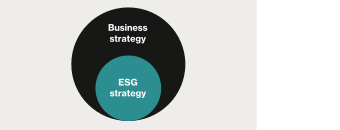
SoftwareOne’s ESG program comprises four pillars: environment, services and solutions, social, and governance. Our ESG program complements and reinforces our business strategy by including services and solutions as one of the four ESG pillars. Refining and scaling up our existing ESG-related services and solutions (e.g., cloud sustainability to measure customers’ carbon footprint) directly contributes to revenue generation associated with our three business lines.
SoftwareOne can also benefit from positive employer branding and greater customer engagement as our wide-ranging ESG initiatives resonate with existing and prospective employees and customers. The ESG program is designed to benefit all SoftwareOne stakeholders, whether internal or external.
Our AI strategy enhances both customer solutions and internal operations. For customers, our professional and managed services deliver tailored, outcome‑driven solutions, with AI agents accelerating service delivery through intelligent automation. Internally, AI‑driven automation and decision‑support tools empower employees, increasing productivity and supporting operational excellence.
Moreover, we have two high‑impact platforms – SoftwareOne Marketplace and Cloud‑iQ. Marketplace is a global, multi‑vendor digital procurement platform that centralizes software discovery, purchasing, subscription management, contracts, and renewals. Cloud‑iQ delivers advanced cloud and software subscription management, billing, cost optimization, analytics, and global channel management through a unified interface.
Our formidable go-to-market engine utilizes extensive customer data and insights to identify targeted, scalable sales opportunities and sales‑play strategies across both direct and channel motions.
Material IROs and their interactions with our strategy and business model
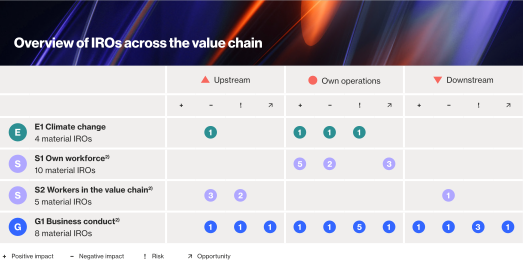
2)Includes some entity-specific material topics.
Note: In total, there are 27 material IROs. Some of the IROs within S2 Workers in the value chain and G1 Business conduct are duplicated because they appear in multiple parts of the value chain. This results in a total of 37, which exceeds the 27 IROs identified in our double materiality assessment. The following topical standards are not material to SoftwareOne: E2 Pollution, E3 Water and marine resources, E4 Biodiversity and ecosystems, E5 Resource use and circular economy, S3 Affected communities, S4 Consumers and end-users.
Material IROs, business strategy, and resilience
Our 27 material IROs will directly influence our planned ESG strategy due to be launched in 2026. In this way, the DMA indirectly supports our business strategy and model, as the ESG strategy complements and strengthens our overall direction. Additional information regarding IRO linkages with business strategy is provided in the respective topical standards.
While we made reasonable efforts to understand the nature of our material risks and opportunities, our analysis did not extend to their current and anticipated effects on our financial performance and cash flows as reported in our financial statements.
We did not perform either a qualitative or quantitative analysis to determine SoftwareOne’s ability to address our material impacts and risks, or to take advantage of our material opportunities. We therefore do not have insights into the resilience of our business strategy and business model in relation to our material sustainability IROs. At best, we can present our various current and planned actions and initiatives in the respective topical standards in the sustainability statements.
Additional information
For more information about our strategy and business model, including our ESG strategy, please refer to the following sections of the annual report:
Our strategy and business modelOur approach to sustainabilityOur value chain
We will explore avenues to leverage the heightened scrutiny and prioritization of sustainability matters, spurred on by CSRD and the EU Taxonomy, to engage more robustly with value chain actors to advance our ESG strategy.
Value chain features
Consistent with our business model and strategy, SoftwareOne operates as a business-to-business (B2B) software reseller. We act as an agent to facilitate downstream customers’ access to software and cloud licenses provided by upstream software publishers/vendors and hyperscale cloud providers. This places us in the middle of the value chain for our industry segment.
Our operations include sales/licensing, deployment, development, design, and marketing of software services and solutions.
Inputs and resource dependencies
Our key inputs or resource dependencies include:
- Human capital in the form of our employees: our employees’ expertise enables us to support customers in navigating digital transformation, optimizing cloud usage, and aligning software strategies with business needs.
- Software and cloud services and solutions: these are our core offerings that depend on our relationships with software publishers and suppliers, and with cloud hyperscalers.
- Energy: to power our offices and handful of data centers.
Benefits created for stakeholders
Communities
We create employment opportunities in the countries where we operate and revenue generation opportunities for business partners and service providers. We contribute towards local and national economic development through taxes paid to local, regional and national governments.
Customers
We help customers maximize their software and cloud investments by reducing costs and leveraging new opportunities in AI.
Employees
We cultivate an attractive and inclusive workplace underpinned by SoftwareOne’s six core values of integrity, momentum, passion, accountability, customerfocus and trust. Our people-first culture prioritizes employee well-being and development.
Shareholders
We create long-term value for our shareholders by achieving consistent growth in profitability, following through on our business plans, and communicating with capital markets in a timely and transparent fashion. For more information about shareholder benefits created, please refer to the section The SoftwareOne share.
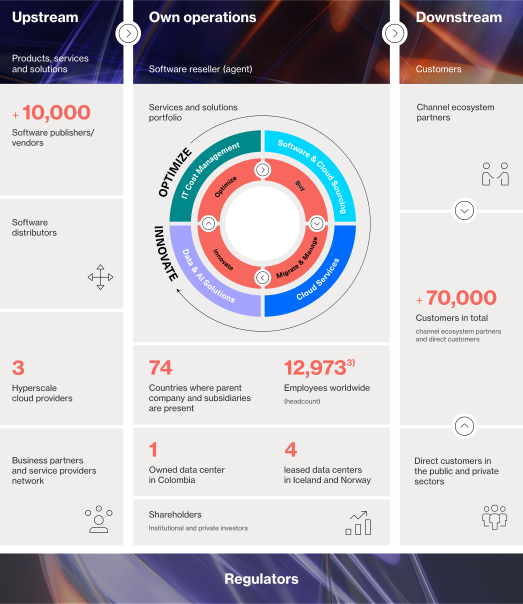
3)Expressed in full-time equivalent employees (FTEs), we had 12,712 FTEs in 2025.
Upstream
We have a large international footprint and interact with thousands of software publishers, vendors, and suppliers—primarily headquartered in North America—along with three hyperscale cloud providers.
The key characteristics of our upstream relationships are outlined below.
Software publishers
Software publishers design or create software solutions, sometimes including a cloud storage component.
Top software publisher by volume and strategic importance:
- Microsoft, which provides software and cloud services used internally by SoftwareOne, as well as our customers downstream.
- Our high commercial dependency on Microsoft poses inherent risks. To mitigate this, we are diversifying our capabilities.
Other important software publishers include, but are not limited to:
- Atlassian, Adobe, Broadcom, Citrix, IBM, JetBrains, Nutanix, Oracle, Red Hat, ServiceNow, think-cell, and VMWare.
Software distributors
Software distributors act as intermediaries between SoftwareOne and software publishers.
Major hyperscale cloud providers
Hyperscalers are differentiated from other cloud storage providers by their global accessibility and reach; their enterprise orientation; and the software-/product- agnostic nature of their platforms.
Our three major hyperscalers are Amazon Web Services (AWS), Google Cloud Platform (GCP), and Microsoft Azure.
Business partners and service providers
To support in-country operations, we have myriad relationships at the local level. Examples include:
- Banking and financial service providers (e.g., lenders and creditors)
- Caterers
- Couriers
- IT providers (e.g., hardware and software used internally by SoftwareOne)
Downstream
Our downstream value chain includes both indirect and direct customer relationships. In total, we have +70,000 customers.
Channel ecosystem partners:
- Partners distribute SoftwareOne services to more than 200,000 end-users
- These partners are a combination of cloud resellers, hosters/managed service providers, and independent software vendors (ISVs)
Direct customers:
- Direct customers across public and private sectors
- Include small and medium enterprises (SMEs) and large corporate clients
Interests and views of stakeholders
We engage with internal and external stakeholders on a range of topics including business and ESG strategies and marketplace offerings.
Active listening and regular dialogue yield valuable insights into our stakeholders’ views, concerns and expectations. Attuning SoftwareOne’s business model, strategy and ESG approach to these insights supports our commercial and sustainability efforts.
Employees who work directly with our stakeholders understand their views and how these views relate to our business model and strategy.
Information about stakeholder involvement in our 2025 DMA appears in the Double materiality assessment section in ESRS 2.
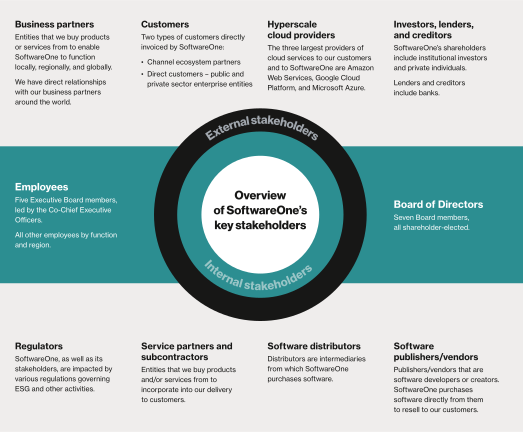
Internal stakeholders
SoftwareOne engages with employees and other internal stakeholders through:
- Global, regional and local channels and formats, directed at specific populations according to their communications and informational needs
- Email updates and newsletters
- Our intranet portal
- Annual employee engagement survey and quarterly integration surveys, as well as frequent pulse checks
- Various in-person or virtual town halls, update calls, office hours, Q&A sessions, or topic-specific knowledge sessions
- Our internal social media platform Viva Engage
- Visual channels such as desktop lockscreens
Engagement with employees contributes to a motivated and productive workforce whose views and concerns are addressed, and whose actions are aligned with the business strategy.
Corporate functions and business areas engage with the Board of Directors (BoD) and Executive Board (EB) to ensure alignment on strategic imperatives. The Global ESG Team shares stakeholder views on sustainability-related topics with the BoD and EB as part of broader ESG updates, as described in the Sustainability governance section.
External stakeholders
We engage with a wide range of external stakeholders, including:
- Customers
To understand their needs through direct dialogue, surveys (e.g., Voice of the Customer), our corporate website, and meetings. - Software publishers, distributors, and cloud providers
To coordinate service delivery and strengthen partnerships. - Local business partners and service providers
To procure goods and services for maintaining smooth internal operations. - Shareholders and research analysts
To demonstrate SoftwareOne’s value creation and investment-worthiness via quarterly earnings presentations, annual reports, roadshows, and one-on-one meetings. - Regulators
To respond to formal requests and interact on compliance. - Educational institutions
For recruitment purposes. - Industry platforms and associations
To share information and find solutions to common challenges.
Double materiality assessment
First-time application of the principles of double materiality
SoftwareOne conducted its first DMA aligned with CSRD and ESRS requirements in 2025.
The 2025 DMA replaces our previous materiality assessment, which followed a different methodology and did not represent the combined company.
The DMA forms the basis of the disclosures in the sustainability statements, and it will be reviewed and updated annually. Future updates will include refinements to our process and methodology.
Process to identify and assess material impacts, risks, and opportunities
The 2025 DMA was group-wide and global in scope, applying to all our subsidiaries and entities.
In order to identify the impacts, risks, and opportunities that SoftwareOne and our stakeholders perceive as the most important, we developed a four-step process.
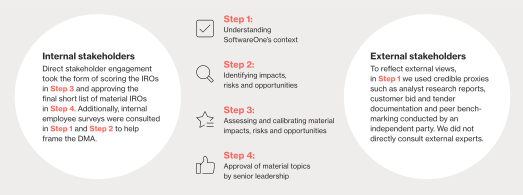
Step 1: Understanding SoftwareOne’s context
To understand sector- and company-specific sustainability matters, we consulted various internal and external sources. We reviewed internal employee surveys, SoftwareOne’s enterprise risk register, external benchmarking of peer companies in the IT industry, ESG legislation, analyst research reports, and a selected sample of customer bids and tender documentation.
This step helped ensure that the DMA was informed by diverse perspectives and had a solid foundation aligned with industry standards and best practices.
Step 2: Identifying impacts, risks, and opportunities
We drew on the previous materiality assessments of SoftwareOne and Crayon respectively, combined with Step 1, to identify a long list of 58 impacts, risks and opportunities. The long list was aligned with the CSRD/ESRS framework and included entity-specific topics or issues.
Step 3: Assessing and calibrating material impacts, risks, and opportunities
To evaluate the materiality of the identified IROs, we involved internal subject matter experts from across the organization. The internal subject matter experts:
- Scored the IROs and provided a rationale for their scores – qualitative and quantitative evaluation to determine impact and financial materiality. We applied the double materiality framework in line with the criteria set forth in ESRS 1.
- Reviewed and commented on the wording of the IROs.
The Global ESG Team further validated the evaluation by the subject matter experts, with targeted input from the Internal Audit function.
Relationship between sustainability due diligence and our DMA
As described in the section Statement on due diligence in ESRS 2, our sustainability due diligence involves multiple corporate functions. Internal subject matter experts whose responsibilities encompass topics such as labor and human rights in our own operations and in our value chain, third party due diligence, and anti-bribery and corruption scored the relevant IROs corresponding with their areas of expertise.
Prioritization, interconnectedness and causality of impacts, risks, and opportunities
We did not place any particular emphasis on identifying activities, business relationships, or geographies that could heighten the risk of adverse impacts. As this was our first DMA, we focused on understanding our material IROs – we did not identify any cases where the same topic gave rise to explicitly interconnected impacts, risks, and opportunities. We distinguished between IROs either caused or contributed to by SoftwareOne, or linked to SoftwareOne. This information was captured as part of the supporting documentation in our DMA process.
Step 4: Approval of material topics by senior leadership
Feedback on, and formal final approval of, the DMA was provided by the EB as well as the BoD.
Scoring of impacts, risks, and opportunities
We used a quantitative approach to assess each IRO, based on ESRS 1 requirements. All items were scored on a scale from 1 to 5, with a defined threshold of 4.0 distinguishing material IROs from immaterial ones. We established qualitative descriptions for each scoring criterion.
The key assumptions made were:
1. In scoring all our IROs, we assumed ongoing integration across all areas of the company and growing cohesion with:
- Our business model and strategy, which emphasises AI in external marketplace offerings and as a business enabler in our internal operations. This view informed the identification and scoring of AI-related IROs, resulting in material entity-specific disclosures in this area.
- Our core company values, which include integrity (honesty, transparency, and speaking up) and trust (people-focused) – a significant number of IROs identified were therefore in the social pillar (56% of our material IROs were in S1 and S2), with the governance pillar constituting the second largest category (30% of our material IROs were in G1).
2. In scoring risks and opportunities, we quantified the financial magnitude (financial impact) based on the adjusted EBITDA of the combined company. As the DMA was completed during the year before full-year financial results were available, we relied on projected estimates for adjusted EBITDA. We assumed our projected estimates were reasonably accurate and therefore did not mislead or bias our internal subject matter experts in their scoring.
Scoring of impact materiality
The identified impacts can be classified as a combination of potential/actual and positive/negative. The scoring scale for each criterion was 1 (lowest) to 5 (highest). To arrive at a score for impact materiality, we took into account both severity and likelihood.
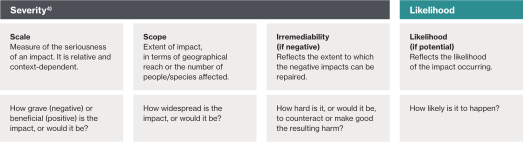
4)Severity score = Scale + Scope + Irremediability* (*if negative)/3
Materiality score for potential impacts (positive or negative): Likelihood score + severity score/2
Materiality score for actual impacts (positive or negative): Severity score = materiality score
Exceptions: human rights impacts (positive or negative, actual or potential) were scored according to severity. Potential positive human rights impacts were scored according to likelihood and severity.
Scoring of financial materiality
Financial effects can be either risks or opportunities. To arrive at a score for financial materiality, we took into account magnitude and likelihood. We aligned the definition of financial magnitude with the definition of financial materiality used internally for financial reporting. The scoring scale for each criterion (magnitude, likelihood) was 1 to 5, where 1 is the lowest possible score and 5 the highest.

Materiality score for either risks or opportunities: Likelihood score + magnitude score/2
Findings from our double materiality assessment
We believe the findings of our 2025 DMA present a true and fair picture of our material impacts, risks, and opportunities based on the information available at the time and any inherent constraints in our methodology. Given that this was our first DMA and first set of material impacts, risks, and opportunities, there are no changes to the IROs compared to the previous reporting period.
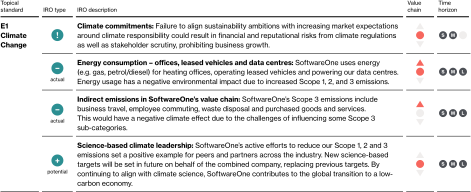
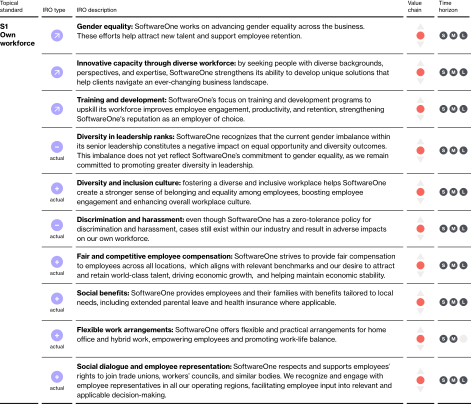
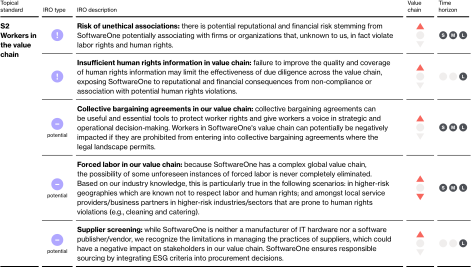
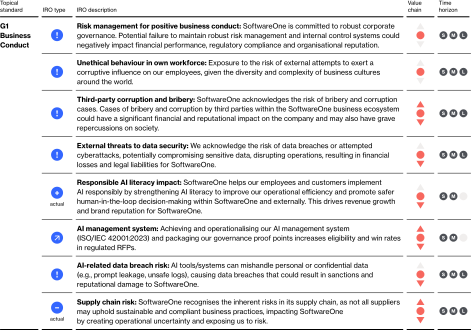
In total, 27 material IROs (impacts, risks, and opportunities) were identified across the environmental, social, and governance pillars. Based on our assessment, four of the ten topical ESRS standards were deemed applicable to SoftwareOne.
Description of our material impacts, risks, and opportunities
More detailed descriptions of our 27 material IROs — such as time horizons and position in the value chain — are provided in the following tables.