S1 Own workforce
SoftwareOne is a reliable employer and a people-centric organization. We consciously adopt an inclusive, partnership-oriented philosophy in our relationships with our employees.
Material impacts, risks, and opportunities related to own workforce
All employees in our own workforce who could be materially impacted by the combined company are included in the scope of our disclosures under ESRS 2. The methodology statement at the end of our workforce profile provides our definition of employees and non-employees.
Based on currently available information:
- We have no operations at significant risk of forced labor, compulsory labor, or child labor.
- We have no indications that employees with specific characteristics or in certain geographies face higher risk than others within our workforce.
- We do not yet have a climate transition plan, and therefore, no related material IROs are identified.
The workforce-related material IROs that emerged from our DMA are discussed throughout our S1 section of the report. These include the interaction of the IROs with our business model and strategy, usually under the heading Plans for 2026.
Process to identify material IROs related to own workforce
Through our double materiality assessment (DMA), we evaluated both the impact and financial materiality of key workforce topics. The material IROs related to our own workforce that emerged from our DMA are described throughout S1.
Note that we have made entity-specific disclosures related to flexible work arrangements. We found that our SoftwareOne-specific material IROs related to the above were not sufficiently covered under the ESRS framework, hence the need for entity-specific disclosures. In addition, where appropriate, we supplement ESRS-mandated disclosures with entity-specific data points – for example, within the process for engaging with our own workforce and workers’ representatives, and collective bargaining coverage and social dialogue – to ensure comprehensive reporting.
Further details on the methodology applied are provided in the section Double materiality assessment.
Our workforce profile – key employee characteristics
Total number of employees and turnover
Midway through 2025 (June 30, 2025), SoftwareOne had 11,290 employees by headcount (2024: 9,475), indicating a 19% increase in workforce in the first half of the year. Following the acquisition of Crayon, an additional 4,368 employees and contractors were incorporated into the organization, and an exercise to identify duplicate and/or redundant roles was conducted, resulting in a final headcount figure of 12,973 by the end of 2025.
This is reflected in an average annualized turnover rate of 27.33% in H1 2025 and 19.35% in H2 2025 (2024: 16.62%). A total of 2,712 employees left the company in 2025, 1,701 on a voluntary basis, and 1,011 on an involuntary basis. Whilst this is higher than the normal trend for the organization, it is recognized that the extraordinary circumstances of a major acquisition have contributed to this increase and will continue into 2026 as new business models come into force and the workforce is normalized to support future ambitions.
Geographic distribution
ESRS 2 SBM-1 40(a)(iii)
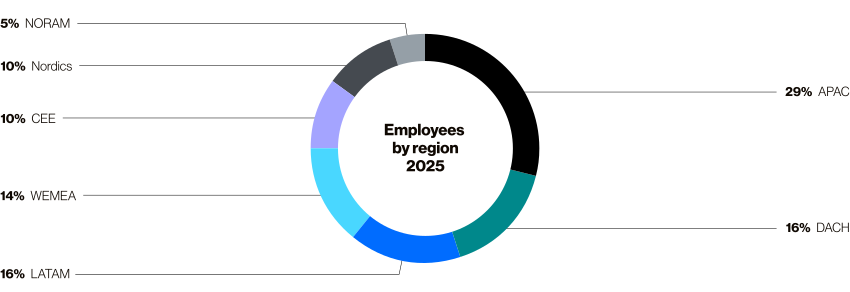
In 2025, most of our employees were located in India, Germany, and Colombia, within the APAC, DACH, and LATAM regions. Together, these countries accounted for 39% of our total workforce in 2025.
The distribution of our employees around the world in 2025 was as follows:
Employees by region 2025
Region | Number of employees (headcount) |
APAC | 3,717 |
CEE | 1,236 |
DACH | 2,095 |
LATAM | 2,115 |
NORAM | 660 |
Nordics | 1,289 |
WEMEA | 1,861 |
Total number of employees | 12,973 |
These metrics are being reported for the first time in 2025 for the combined company. In our previous ESG disclosure (NFR 2024), SoftwareOne reported percentage breakdowns and not the number of employees. Crayon, on the other hand (Annual Report 2024), did report the number of employees by region in 2024, in line with CSRD/ESRS, but reported on different regional clusters, thus making it impractical to provide comparative metrics for previous years for the combined company.
In addition, countries where we had at least 50 employees simultaneously representing at least 10% of our total number of employees in 2025 are shown below:
Total (headcount) | Male | Female | Other | |||||
Country | Number of employees | Proportion of workforce | Number of employees | Proportion of workforce | Number of employees | Proportion of workforce | Number of employees | Proportion of workforce |
Germany | 1,686 | 13% | 1,005 | 59.6% | 673 | 40% | 8 | 0.4% |
India | 2,082 | 16% | 1,458 | 70% | 612 | 29.4% | 12 | 0.6% |
These metrics are being reported for the first time in 2025 for the combined company.
Employees by gender and contract type
Men represented the majority of our overall workforce in 2025 at 65%, women the minority at 34%, and the Other category accounted for 1% of our workforce.
In terms of contract type, our employees are classified as permanent, i.e., they are under an employment contract with no specified end date. SoftwareOne has no permanent employees with non-guaranteed working hours.
Gender composition of workforce and contract types 2025
Female | Male | Other | Total | |
Number of employees | 4,424 | 8,398 | 151 | 12,973 |
Number of permanent employees | 4,424 | 8,398 | 151 | 12,973 |
Number of temporary employees | 0 | 0 | 0 | 0 |
Number of non-guaranteed hours employees | 0 | 0 | 0 | 0 |
These metrics are in headcount and are being reported for the first time for the combined company and were not previously part of the ESG disclosures for SoftwareOne. Crayon (Annual Report 2024) did report on this, in line with CSRD/ESRS.
Methodology
Data sources and reporting periods
The headcount (HC) figures are representative of the combined company as of December 31, 2025.
The data points on our workforce profile and employees were extracted from the following sources:
- Global HR system (Workday): core data was extracted using a standard HC report and compiled in an Excel spreadsheet, based on the number of permanent employees (HC).
Definition of employees and non-employees
We define our number of employees as HC employees. This reflects the people we employ, and for the purposes of this report, we do not consider whether an employee is working less than a standard working week (part-time).
The definition of HC includes:
- Permanent employees
- B2B non-payroll
- Apprentices, interns, and working students
Excluded from HC are contingent workers (under temporary contract) and vendor resources (sub-contractors) hired by SoftwareOne. We refer to temporary contractors and sub-contractors as non-employees. While they are described in this methodology statement, non-employees are not included in any metrics reported in S1.
Definitions of contract types
- Permanent employees: this employee type is hired on an ongoing, indefinite basis with no set end date, including all benefits.
- B2B non-payroll: this employee type is hired on an ongoing, indefinite basis with no set end date, but paid on the basis of invoiced hours instead of through payroll. These employees do not receive benefits.
- Apprentices: this employee type is hired on a formal learning program administered via the SoftwareOne Academy. Apprentices are governed under local government-mandated protocols, which set out the scope of dual learning programs through college or university, on-the-job practical learning programs specific to SoftwareOne roles and job opportunities, and a structured rotation program in different departments and teams. Apprentice programs are typically between 9 months and 3 years in duration; during this time, apprentices are paid through payroll and treated as employees.
- Interns: this employee type is hired for a short period of time, typically 3 months, and fulfils a specific business need. SoftwareOne administers the internship program based on a return-to-work concept, providing opportunities for people who have taken career breaks to return to the workplace and upskill or reskill. Interns are paid through payroll and treated as employees.
- Working students: working students are formally enrolled in an educational institution while being employed, typically on a part-time basis or for a single semester, in order to gain practical experience. Working students are not part of the SoftwareOne Academy learning programs, although they may enroll in any training programs available through the SoftwareOne learning platform. Working students are paid through payroll and treated as employees.
Employee turnover calculation
The employee turnover rate includes all departures (number of employees who leave voluntarily or due to dismissal, retirement, or death in service), calculated by the number of terminations in the month divided by the average headcount over the reporting period.
Cross-reference to financial statements
Our performance highlights section reports on the following metrics:
- The number of HC in SoftwareOne’s workforce in 2025. The metric is presented in FTEs in the graphic, with a footnote disclosing the equivalent in HC.
Assumptions
- All active users are registered in the system.
- Access to the SoftwareOne domain is handled through automatic user creation in Active Directory, which ensures that data is accurate.
Limitations and challenges
- Workday is a complex human resource information management system and can never be 100% accurate at a given point in time, since data must be entered and changes will not be reflected until a request is received or an approval flow concludes.
- Following the Crayon acquisition, there was a mass upload exercise to move records from the Crayon HRIS (Talentsoft) to the SoftwareOne HRIS (Workday). There is a continuing exercise to validate the data received and there may therefore still be inaccuracies reflected in this report. Every effort has been made to validate and manually check the data before inclusion.
Process for engaging with our own workforce and workers’ representatives
We utilize several communication channels to promote collaboration, mutual respect, and two-way dialogue with our employees. We believe employee engagement is essential because employee engagement affects employee morale and productivity.
Employee engagement also affords opportunities for employees to share their perspectives on material positive and negative impacts (actual and potential) that affect them, resulting in employees influencing SoftwareOne’s operational and strategic decisions. Whether globally or locally, the perspectives of employees in our workforce who may be particularly vulnerable to impacts (e.g., underrepresented or historically marginalized groups and employees taking part in social dialogue bodies) are incorporated into existing communication channels.
Global communication and engagement
SoftwareOne’s suite of global communication tools includes:
- Monthly town halls with the Executive Board (EB), and other town halls arranged by different departmental, regional, or country heads within the organization.
- Centralized internal information hubs in the form of internal SharePoint (intranet) pages administered by the different teams and functional areas.
- Our annual employee engagement survey, which is delivered to all employees worldwide.
Our annual employee feedback survey
The latest edition of our survey was conducted in May 2025 and therefore represents SoftwareOne employees pre-merger only, deviating from the total number of employees as of December 31, 2025. Participation is completely voluntary, and responses are anonymous. We had high overall scores across all measured categories, an eNPS score of 17.48, which correlates to a good rating, and a satisfaction rating of 73%, consistent with past results. The overall participation rate in our employee engagement survey in 2025 was 78%. For 2026, a survey for the combined company will be conducted.

These metrics are optional, entity-specific data points that were previously reported in our stand-alone 2024 NFR. We have chosen to include and continue reporting on them in the current reporting period (2025) for the completeness of reporting.
The survey results are shared with the EB to inform their planning of strategic priorities and follow-up actions. Team leaders and supervisors use the results within their respective teams to trigger dialogues about potential improvements.
Local communication and engagement
Employee engagement also takes place through local general managers, local human resource representatives, safety representatives, and local committees catering to different needs and action areas. The format and frequency of engagement are determined by the local parties, aligning with local legislation where relevant.
Additional information
Additional information about engagement with our workforce and workers’ representatives is available in these S1 sections:
Diversity, equity, inclusion, and belongingCollective bargaining coverage and social dialogueLabor and human rights in own workforceRemuneration
At SoftwareOne, we are committed to ensuring that our employees are well-compensated and supported in all aspects of their professional and personal lives.
Policies related to remuneration
SoftwareOne offers generous and competitive remuneration to attract and retain world-class talent. Our Global Total Rewards Policy forms the basis for the remuneration approach globally. It outlines the framework for employee compensation, including base pay, short and long-term variable pay, recognition and retention awards, and benefits. Additionally, our local policies on remuneration and benefits comply with local laws and regulations.
SoftwareOne assesses local benefit structures regularly in collaboration with the local human resources representatives to align on a global approach. As we approach legal merger activities, in 2026 and 2027 we will do an additional review to analyze the different benefits on offer currently from Crayon and SoftwareOne and harmonize these country by country.
Currently, there is no global benefits scheme. Our health insurance offerings are comprehensive, providing additional coverage for a wide range of medical needs. We also offer well-being programs around the world to support the mental and physical health of our employees.
Governance
The Global Total Rewards Policy is updated and approved by the Compensation Committee and the Board of Directors (BoD). All local policies are administered by the local human resources representative, subject to prior approval by local and regional management teams.
Accessibility
The Global Total Rewards Policy is available to all employees through our internal SharePoint. Local policies are made available through internal information-sharing portals and materials, including country-specific handbooks.
Actions related to remuneration in 2025
Remuneration
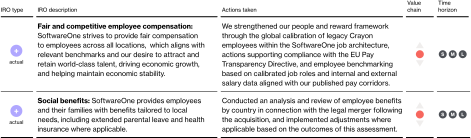
The technology industry faces ever-greater challenges in securing employees with the right skill profiles. We provide annual inflation adjustment reviews and performance-related increases to reward our employees for their hard work and dedication.
To reinforce our commitment to standardized remuneration and to address pay equity concerns, we rolled out a global job architecture framework in 2024. This marked the first phase of a multi-year program to harmonize roles and levels across the organization, enabling a more consistent and transparent approach to compensation worldwide. The framework already supports accurate benchmarking of minimum and maximum remuneration against external market data and internal comparators across regions. The next phase of the program focuses on calibrating roles for legacy Crayon employees. In parallel, we are ensuring compliance with the EU Pay Transparency Directive. This program will ensure we are providing fair and consistent salary structures across all subsidiaries, departments, and roles. As part of this work, we consider factors such as gender, age, and nationality to help eliminate bias and ensure non-discriminatory practices. We have allocated headcount within the compensation & rewards team within P&C to lead the global job architecture framework program, in collaboration with other teams, to ensure the success of the program.
Benefits
We understand the importance of supporting our employees beyond their salaries. All SoftwareOne subsidiaries provide maternal, paternal, and adoption leave according to local regulations. In several countries, we provide parental and family leave benefits that go beyond statutory requirements. For example, in the United Kingdom, employees are entitled by law to statutory maternity pay only; however, we provide 26 weeks of fully paid maternity leave. Similarly, while UK legislation requires a minimum of two weeks of paternity leave, with only one week required to be paid at the statutory rate, we offer three weeks of fully paid paternity leave. In Norway, we also exceed legal requirements by providing paid leave for fathers during the two-week period following the birth of a child, although the legislation does not require this leave to be paid. In Qatar, we offer 5 days of paternity leave, which is not mandatory by local law. These examples reflect our commitment to supporting employees and their families beyond minimum regulatory standards.
In addition to statutory leave entitlements, SoftwareOne fosters a culture of work-life balance. Employees are encouraged to find the balance that works best for them to maintain high standards of work commitment alongside family life and general wellbeing.
Plans for 2026
In 2026, we will focus on harmonizing our benefit landscape across our regions and legacy Crayon entities as we progress through our legal merger activities following the acquisition. We will also focus on the EU Pay Transparency Directive, which forms the cornerstone of our approach to actively address pay disparity across our organization. In this way, the material IROs related to remuneration and benefits influence our business strategy and business model.
Performance related to remuneration
Adequacy of remuneration and redress of pay gaps
All employees are paid adequate wages, in line with the applicable benchmarks provided by Willis Towers Watson, a firm specializing in compensation and benefits data. There are no countries where SoftwareOne employees earn below the adequate wage benchmark. During 2025, it was discovered that employees based in Turkey could be disadvantaged due to higher-than-normal inflation in the country. An exercise was conducted to review benchmarks against historical data points and inflationary trends to identify whether or not employees were still paid in line with our Total Rewards Policy. Following this exercise, an off-cycle salary increase was applied to those employees who were below the median point. We continue to monitor the situation in Turkey and will do so until the inflation trend normalizes.
In 2025, we determined at an aggregated global level that the average compensation of female employees is 21.2% lower than that of male employees. This high-level view does not reflect adjustments for role, level, or geographic pay differences. This highlights an area for improvement to promote pay equity further.
2025 | |
Global gender pay gap (%) | 21.2% |
This metric is being reported for the first time in 2025 for the combined company.
In 2025, the ratio between the highest-paid individual and the median annual salary remuneration for all employees was 20.82. SoftwareOne’s remuneration ratio shows a significant gap due to the different geographies and local markets represented.
Methodology
Global gender pay gap
According to ESRS, the gender pay gap is defined as the difference in average pay levels between male and female employees, expressed as a percentage of the average pay level of male employees.
SoftwareOne calculated our pay gap using the following steps:
- Salary data was collected across all 74 countries where we operate (SoftwareOne and Crayon), including all entities per country, covering all roles and employment types, including interns, apprentices, and working students.
- For each gender category (female, male, and other), we recorded the average total compensation based on fixed salary and average bonus amount.
- The gender pay gap was calculated using the following formula: (average male salary – average female salary)/average male salary x 100.
Please note that SoftwareOne employees may exercise their right not to disclose their gender, and we have excluded the average salary of non-disclosures from this calculation.
Total remuneration ratio
The total annual remuneration ratio describes the ratio between the highest-paid individual and the median annual remuneration of all permanent employees. The methodology applied by SoftwareOne is aligned with the recommended approach under ESRS. This is calculated using the following formula: highest variable salary / median variable salary (excluding the highest-paid individual). Employees receiving severance pay upon leaving the company are excluded.
Targets
We did not set specific targets for remuneration and social protection in 2025 for our own workforce. With an eye towards future requirements for equal pay in Europe, effective from 2026 (stipulated by the European Union Pay Transparency Directive), we plan on implementing further measures to minimize the gender pay gap ratio. In 2026, this will be aimed only at those countries in Europe covered by the European Union Pay Transparency Directive, and we plan to roll out this approach across our entire global organization by 2028.
In the interest of keeping our workforce involved in the processes and changes that impact them, we use our annual employee feedback survey as a sense check that could potentially feed our company’s strategy and future actions.
Training and skills development
We support our employees’ career development and promote them within our company whenever possible. We invest in training for our teams, guided by the belief that this not only improves the quality and efficiency of our organization but also fosters innovation and boosts both employee satisfaction and longevity of tenure at SoftwareOne.
At SoftwareOne, we promote continuous learning for both professional and personal growth. With global access to our course library, everyone has access to continuous learning opportunities through our internal training catalog, which includes:
- Libraries of self-service, self-paced learning content
- Bespoke training developed with and for our various business units and departments
- Instructor-led training sessions focusing on developing core skills and competencies

Policies related to training and skills development
We do not have a formal policy document to guide our training and development activities. However, we emphasize continuous learning through competence and skills development and professional growth opportunities. Developing our people remains a key focus area for SoftwareOne, and we continuously iterate and improve the training offerings based on feedback and requests from our business.
Governance
On a global level, training and skills development is managed by our Talent Development Center of Excellence within the People & Culture function. Many of our development programs are accessible globally through virtual platforms, providing true global coverage to our employees regardless of where they are located. Some programs are also run locally in person by our regional learning & development experts.
Accessibility
All employees have access to the majority of our programs, although a small number are restricted to leadership or technical roles. Available courses and access to content is detailed on the Talent Management Hub within SharePoint and promoted via our People & Culture business partners.
In order to support local needs, some training programs are conducted in the local language, and our content library provides more options on language choices, either captioned or translated.
Actions related to training and skills development in 2025
In 2025, the content and target audiences of the training sessions varied. Major programs align with our three pillars: Core Competencies, Functional/Technical Skills, and Leadership Competencies. Within these pillars, we run flagship programs: PowerU, SalesU, and LeaderU. Alongside these programs, we provide ad hoc and on-request training based on business needs, plus full access to online self-paced learning libraries.
All employees have direct access to external content through our partnerships with Microsoft, AWS, and Google, so that they can build the specific skills and certifications relevant to our cloud partnerships. In addition, all employees have access to over 50,000 learning resources through our content libraries (Skillsoft and Freethink Media), with limited access to Pluralsight and Udemy for more technical learning requirements. All employees can enroll in language learning available through the Learnlight platform. The languages offered are Portuguese, English, French, Italian, German, and Spanish. In 2025, a total of 2,194 learners accessed the platform.
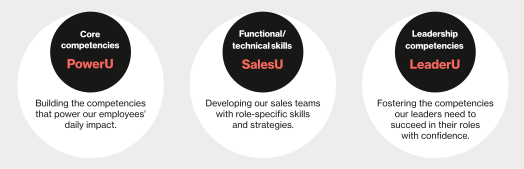
PowerU
Designed to help employees master the essential skills that are vital for success in any role and function. Every two months, the program focuses on a different multi-disciplinary skill that responds to the evolving needs of the business. Significant focus was given to change management due to the high degree of change and uncertainty that occurred during 2025. These are delivered through a variety of self-directed and facilitated formats in different languages (English, French, German, Mandarin, Portuguese, and Spanish). A total of 71 sessions were executed, with 2,272 employee participation.
SalesU
Focuses on the Sales Leader journey. This offering was developed in 2025 and rolled out to a small group of 85 users with 7 sessions run in 4 regions (APAC, CEE, DACH, and WEMEA). This program will be moved out of the centralized Talent function in 2026 and will be incorporated into the Sales Enablement program led by Sales.
LeaderU
Provides leadership skills and competencies for those employees who take managerial responsibility. The portfolio includes Emerging Leaders for employees preparing to move into management, and New Leaders for those recently appointed to managerial positions. It also features Team Leadership, focused on building and developing high-performing teams, and Leader as Coach, which strengthens experienced leaders’ coaching capabilities to enhance their leadership impact. During 2025, a total of 111 sessions were delivered to 416 leaders.
The Academy
The Academy’s mission is to source, recruit, train, support, and aid the transition of young and career-changing individuals from local communities worldwide into SoftwareOne, starting at grassroots level. Now in its fifth year, the SoftwareOne Academy exists in over 30 countries and delivers over 50 courses across Sales, Services, IT and Solutions (ITS) and Marketplace Delivery.
Performance management
Performance and development remain a key focus for SoftwareOne. The performance management cycle is currently run on a half-yearly cycle, and, at every cycle kick-off and close-out, leaders are given the opportunity to attend facilitated sessions on how to run performance reviews and set goals for their teams, which promote development opportunities for their teams. Additionally, all employees have the option to attend sessions on how to write goals.
Plans for 2026
In 2026, we will continue our focus on leadership training in addition to further strengthening learning paths for our key roles and services. We will further develop the foundations of our skills framework to provide employees with insights into how skills, knowledge, and ability are linked to career progression and the delivery of high-quality work in their area of expertise. This will also reflect our evolving business and align with the strategic mission and vision of our future.
Performance related to training and skills development
We foresee an overall increase in training and development opportunities for our employees, with significant investments in training and development programs – reinforcing our commitment to people growth and underlining our people-first approach.
Performance management and training metrics 2025
2025 | |
Employees who participated in regular performance and career development reviews (%) | 88.8% |
Average number of training hours per employee | 13.5 |
These metrics are being reported for the first time in 2025.
In 2025, our training programs achieved a Net Promoter Score (NPS) of 54 upon completion, rising to 68 after two months. As the NPS reflects how willing participants are to recommend the training, this upward trend highlights the sustained positive impact and practical applicability of our development initiatives in employees’ professional lives.
Due to the complexities related to the merger, during the second half of 2025 Crayon employees accessed training content through two separate learning management systems, Talentsoft and Docebo. The average number of training hours per Crayon employee amounted to 0.9 hours in Talentsoft and 2.6 hours in Docebo. Reported training hours are lower than in previous periods, primarily as a result of the system transition linked to the merger. Talentsoft was decommissioned in November 2025, and the data therefore covers the period from July to November 2025. Docebo, the learning platform used by SoftwareOne, could only be partially rolled out to Crayon employees during the reporting period, limiting full access to training content. These constraints will not apply in 2026, when all employees of the combined company will operate on a single learning platform, enabling the reporting of unified training metrics across the entire workforce.
Methodology
Data sources
Our data related to training is collected from our learning platform (Docebo), which consumes core employee ID data from Workday. Docebo provides data on all completed training, including mandatory courses, live sessions, and catalog-based training. The system tracks hours spent and course types. Data was also collected from Talentsoft (Crayons HRIS), where data was extracted to partially calculate Crayon's training hours.
Goal setting and performance reviews are carried out on Workday and Talentsoft, and reports are generated based on the completion of the performance cycle, which includes goal setting, approval, review, and achievement. Data is anonymized and aggregated to provide completion status on regional split.
Training hours per employee
The annual training hours per employee were calculated using the following formula: number of completed training hours (workshops + e-learning + other content) / number of users. We present separate metrics for SoftwareOne and Crayon due to the use of different learning management systems during the reporting period. All SoftwareOne employees, including those who came from Crayon, will be included in this calculation for the next reporting year.
Approach and limitations
- The performance reviews participation was captured in two different systems, as SoftwareOne and Crayon were still using their own HRIS.
- The data collected is analyzed, combined, and consolidated in PowerBI to provide an overview of all training completed by SoftwareOne employees.
- Crayon employees have access to the Docebo interim platform, but the users who use said platform do not represent the whole Crayon population.
- The Docebo platform does not capture participants’ gender, so the gender split of the average number of training hours per employee was not included for this reporting year.
- We do not track training hours spent on partner training platforms (Microsoft, AWS, Google).
Scope
Reported metrics are global in scope, covering SoftwareOne FY 2025 and Crayon H2 2025 worldwide.
Targets
We did not set specific global targets for training and skills development in 2025. Going forward, we will continue to engage with our business and workforce to raise training needs with the Talent Center of Excellence so that relevant and applicable training programs can be developed to support the needs of the business.
Flexible work arrangements
Entity-specific
In today’s dynamic work landscape, SoftwareOne has taken significant strides to ensure that our employees thrive both professionally and personally. We aim to create a work environment where our employees feel valued, supported, and empowered to achieve their best both at work and in their personal lives.

Policies related to flexible work arrangements
The SoftwareOne Global Mobility Policy defines the rules and processes governing employee mobility across the organization. It covers temporary and permanent relocations, both domestic and international, and outlines the criteria and procedures for company-initiated relocations, including associated costs, contractual arrangements, approvals, and employee responsibilities. The policy also addresses employee-initiated relocations, such as moves driven by personal preference or internal career opportunities, as well as remote working arrangements, including hybrid models and temporary remote work abroad. In addition, it establishes the approval process for policy exceptions and sets out compliance requirements and the consequences of non-compliance.
The global policy applies to all SoftwareOne employees with the exception of non-permanent staff (e.g., interns, Academy learners, apprentices, and temporary workers). Even though the policy has a global scope, it is compliant with local employment laws, tax regulations, and health & safety requirements where SoftwareOne operates.
In 2025, following the acquisition of Crayon, a review of available policies was carried out, and two additional policies were published in December 2025, covering global internal mobility and global talent acquisition.
The Global Internal Mobility Policy covers the movement of employees within the organization, either through promotions, lateral transfers, or new roles in different departments or teams. It is a key part of talent management and workforce development strategies. The Global Talent Acquisition Policy’s scope outlines the standardized processes for recruitment, selection, and onboarding.
These three policies complement each other in terms of SoftwareOne’s approach to talent management and the movement of employees within the organization.
Governance
The Chief Human Resources Officer (CHRO) and the EB are the most senior levels accountable for the implementation and approval of the policy. The CHRO specifically approves exceptions, while the EB formally approves the policy itself.
Accessibility
All employees have access to a global internal SharePoint site called Global SoftwareOne Policies, which describes in detail all of our global policies.
Actions related to flexible work arrangements in 2025
We believe that flexible working arrangements help employees manage both their personal and professional responsibilities – for example, reducing daily commuting to our offices and experiencing a higher level of productivity and overall satisfaction. Respecting working hours as well as time zone differences helps us to promote work-life balance.
Our policies are the basis for remote working, hybrid working, and temporary remote working, in line with local legislation. To manage any potential impacts to our workforce, global P&C reviews our policies and collaborates with local teams to ensure we not only comply with regulatory requirements but offer employees alternatives to manage work-life balance. Data from our annual employee feedback survey is analyzed to identify trends and areas for improvement when it comes to work-life balance at SoftwareOne. Our Talent Management team within P&C manages the survey and its results, communicating to the relevant internal stakeholders to influence change within the company.
Plans for 2026
In 2026, we will conduct further analysis of policy alignment as part of the legal merger activities, reviewing country-specific requirements to ensure that local obligations are appropriately reflected in our policies. As part of this process, SoftwareOne is evolving its approach to localized policy publication by introducing country addenda to global policies where applicable, providing employees with access to relevant information through a single source of truth. During the merger, a dedicated project team will review existing local policies, retire documents stored in non-standard repositories, and ensure that any country-specific requirements are incorporated into the global policy framework.
Through these actions, the material impacts, risks, and opportunities (IROs) related to flexible work arrangements continue to inform our business strategy and operating model.
Performance related to flexible work arrangements
As part of SoftwareOne’s annual employee feedback survey, we ask I am satisfied with the balance between my private and work life. The response to this question reflects the satisfaction level that our employees have with our approach to support work-life balance. We had a 77% favorable response to this question, and our overall eNPS score is 17.48, which correlates to a good9) rating. In the category of Work Environment & Culture, the overall rating indicates 80% of respondents had a positive response to the questions in this category.
9)10–30: this range reflects a positive work environment with healthy employee engagement and satisfaction. It is considered good across industries.
The proportion of employees who can either work fully remotely, using the hybrid model, or fully on-site at a SoftwareOne location depends on the nature of the job as well as the remote work guidelines established by each local subsidiary.
In 2025, 25% of all employees were allocated to a remote working location. This data does not reflect those employees who have a designated local office but choose to work from home, either fully remotely or hybrid (remote and SoftwareOne location). The choice of such working arrangements is often concluded between manager and employee and is not recorded in the system. While the data does not reflect an accurate representation of employees who work remote/hybrid, it provides context on the flexibility our employees have within SoftwareOne’s working structure.
Methodology
Due to the entity-specific nature of the IRO and data points, we reported on the satisfaction level of our employees with our approach to providing balance in the workplace, captured via our annual employee feedback survey, which corresponds with our material IRO related to flexible working arrangements.
Data sources and scope
Our 2025 employee feedback survey was conducted in H1 and is therefore representative of SoftwareOne employees pre-merger (not including Crayon employees). It is global in scope and covers five categories of questions. The survey had a participation rate of 78%.
Respondents participated anonymously, and the scores reflected in this report can be presented at the global, regional, and country level as well as global representation of specific departments such as Sales or Software & Cloud. The scores were rated on a 5-point scale between strongly agree and strongly disagree.
Approach
The data was collected through an external survey provider. All input and responses provided remained anonymous, and for teams below five, where the anonymity threshold was not met, the data was aggregated to the next hierarchical level above.
Targets
We did not set 2025 targets for flexible work arrangements in our own workforce. Our well-being campaigns and training support employee well-being and improve their work-life balance. In the interest of keeping our workforce involved in the processes and benefits that impact them, we use our annual employee feedback survey as a sense check that could potentially feed our company’s strategy and future actions.
Discrimination and harassment

Policies related to discrimination and harassment
SoftwareOne is committed to treating all employees with respect and dignity – both in our own operations and in our value chain. SoftwareOne has a zero-tolerance policy for all kinds of discrimination and harassment. However, the steady growth of SoftwareOne’s business year-on-year places more onus on us to manage the potential risk of discrimination and harassment as we grow in scale and complexity.
Global policies and procedures in 2025, relevant to preventing harassment and discrimination internally, include:
- Global Anti-Discrimination and Anti-Harassment Policy
- Code of Conduct
Global Anti-Discrimination and Anti-Harassment Policy
Establishes SoftwareOne’s zero-tolerance approach to discrimination and harassment, promoting fairness, inclusivity, and respect. It defines prohibited behaviors (discrimination, verbal/physical harassment, bullying, sexual harassment) against others, including discrimination based on race, colour, sex, sexual orientation, marital status, pregnancy, parental status, religion, political opinion, nationality, ethnic background, social origin, social status, indigenous status, disability, age, union membership, and any other characteristic protected by local law, as applicable. It outlines roles and responsibilities, and sets out procedures for reporting, remediation, confidentiality, and non-retaliation. This policy applies to all employees, independent contractors, suppliers, and third parties acting on behalf of SoftwareOne. Compliance is mandatory, with disciplinary measures for violations.
- Governance: overall ownership of the global policy resides within People & Culture. The anti-discrimination and harassment provisions of the policy are jointly monitored and enforced by local, regional, and global human resources representatives with support from global P&C. The policy was approved by the EB, and any exceptions to the policy need approval by the CHRO. In severe cases, the escalation might go to the BoD.
- Accessibility: available internally via SharePoint and communicated through compliance training and awareness programs.
Code of Conduct
Serves as a foundational guide for ethical behavior and decision-making across SoftwareOne. It includes specific provisions against harassment and discrimination, which are mentioned in the sections related to integrity and employee satisfaction. All employees must ensure they never use inappropriate language or exhibit behavior that makes others feel uncomfortable or marginalized, including any form of discrimination, intimidation, harassment, or violence. Incidents of discrimination and harassment can be reported directly to the manager or through SoftwareOne’s grievance channels, as described in the document. The Code of Conduct applies to all employees globally.
- Governance: overall ownership of the Code of Conduct resides with our Legal & Compliance department and was approved by the EB. The Code of Conduct is administered by local human resources representatives and general managers.
- Accessibility: the Code of Conduct is available on our internal SharePoint and publicly on our global corporate website. It is communicated through onboarding, compliance training, and leadership messaging.
Both the Global Anti-Discrimination and Anti-Harassment Policy and the Code of Conduct align with each other, as well as with the Code of Conduct for Business Partners, the Integrity Line Reporting Policy, and the Compliance Reporting Policy, committing the company to respect all relevant laws and regulations in jurisdictions where SoftwareOne operates.
Alignment with international standards
SoftwareOne bases its policies on key international labor standards such as the UNGPs, the Organization for Economic Cooperation and Development (OECD) Guidelines for Multinational Enterprises, International Labor Organization (ILO) core conventions, and the United Nations Universal Declaration of Human Rights. Our global policies and procedures are supplemented with local policies and procedures that comply with local laws and regulations.
Actions related to discrimination and harassment
In 2025, People & Culture published a new global policy on anti-discrimination and anti-harassment. This policy addressed harassment, discrimination, and violence by sharing clear guidelines for acceptable behavior and a respectful, inclusive, and safe environment at SoftwareOne. The policy also outlines the process for reporting harassment, discrimination, or violence, ensuring that our people can come forward safely and confidentially. It also specifies how complaints will be investigated and the protection in place for whistleblowers.
Harassment and discrimination were also covered in the mandatory annual training for all SoftwareOne employees as part of our Compliance, Data, and Security Month – a dedicated initiative driven by the Global Compliance team, in collaboration with other departments, focused on ensuring every employee completes essential learning courses on compliant behavior, data protection, and internet security. In 2025, the program contained 5 mandatory courses, including the Global workplace harassment prevention for employees course.
All SoftwareOne employees can raise concerns about discrimination, harassment, or other matters directly with the People & Culture team, the Compliance team at compliance.global@softwareone.com, or by submitting a report on the SoftwareOne Integrity Line and Crayon’s concerns channels. In addition, we offer confidential reporting channels described under the heading Grievance mechanisms.
All employees are encouraged and instructed to report any concerns or potential breaches through these channels, as communicated in our internal policies (Global Anti-Discrimination and Anti-Harassment Policy and Code of Conduct). We have specific team members within the Talent Management team who are in charge of updating and implementing the policy, in collaboration with global P&C and the Legal & Compliance team, as owners of the Integrity Line. The collaboration within teams ensures our actions to mitigate any impacts on our workforce are successful.
Plans for 2026
In 2026, we plan to continue to require our employees to complete training related to this topic. In this way, the material IROs related to discrimination and harassment influence our business strategy and business model.
Performance related to discrimination and harassment
SoftwareOne does not tolerate any forms of harassment or discrimination. Reported incidents of harassment and discrimination are referred to our Legal & Compliance and People & Culture teams for investigation and resolution.
Number of complaints and incidents of discrimination and harassment within our workforce 2025
2025 | |
Total number of incidents of discrimination, including harassment, reported in the reporting period | 21 |
The number of complaints filed through channels to raise concerns (including grievance mechanisms and excluding cases of discrimination and harassment) | 67 |
Number of complaints filed through the National Contact Points for OECD Multinational Enterprises | 0 |
The total amount of fines, penalties, and compensation for damages as a result of the incidents and complaints disclosed above, and a reconciliation of such monetary amounts disclosed with the most relevant amount presented in the financial statements | CHF 0 |
This is the first year (2025) we have reported these metrics, which reflect the combined company reports submitted through the SoftwareOne Integrity Line & Crayon’s concerns channel. SoftwareOne has previously reported on the number of incidents of discrimination in our stand-alone 2024 NFR. Crayon reported both the number of incidents of discrimination and the total amount of fines in its 2024 Annual Report.
Methodology
Reporting boundaries and definitions of key terms
- Reported incidents pertain to investigations reported in 2025.
- All claims of harassment and discrimination are taken seriously and first undergo an initial assessment by Legal & Compliance, usually after being logged through the Integrity Line, where the report is acknowledged and screened for validity, specificity, and available evidence. If the concern is found to be valid and reported in good faith, it is then referred to People & Culture for further investigation, since they handle workplace‑conduct matters such as harassment and discrimination.
Data sources
We rely on data from the SoftwareOne Integrity Line and Crayon’s concerns channels, which include the dedicated email and the telephone hotline.
Scope
Reported metrics are global in scope, covering SoftwareOne 2025 and Crayon H2 2025.
Assumptions
All discrimination and harassment metrics are reported to People & Culture and the Head of Group Compliance for all cases, with high‑risk cases escalated to the Audit Committee and medium‑risk cases reported to the Chief Legal Officer.
Targets
We did not set 2025 targets for discrimination and harassment in our own workforce, but we have zero tolerance for discrimination and harassment, as stipulated in our Global Anti-Discrimination and Anti-Harassment Policy and our Code of Conduct.
We may consider target-setting in the future if there are significant changes in the number of incidents related to discrimination and harassment. . In the interest of keeping our workforce involved in the processes that impact them and the overall company culture, we use our annual employee feedback survey as a sense check that could potentially feed our company’s strategy and future actions.
Diversity, equity, inclusion, and belonging
Our commitment to DEIB extends across various dimensions, including gender and gender identity, age, disability, neurodiversity, sexual orientation, nationality, ethnicity, social origin, experience, and other attributes.
SoftwareOne has a global presence, including in local markets where under-represented and vulnerable groups are part of our workforce and broader society. By embracing diversity, we create a work environment that attracts top talent and enables us to better serve our customers’ diverse and evolving needs.
Policies related to DEIB
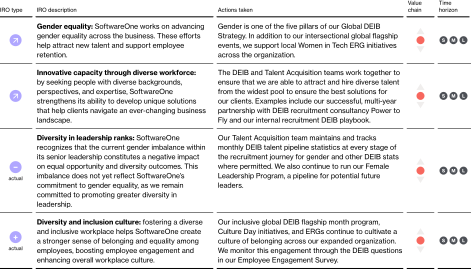
SoftwareOne did not have a formal DEIB policy in 2025. We have a high-level Global DEIB Strategy, articulated in 2024, which guides our activities. These activities are driven by one or more of our five pillars of diversity (ability, ethnicity, gender, LGBTQIA+, and social mobility) as well as their intersectionality.
Governance
The dedicated Global DEIB and Employee Experience team, part of the People & Culture team, leads SoftwareOne’s DEIB initiatives. To ensure DEIB remains a priority at senior levels, the DEIB team reports to the Global Head of Talent, who in turn reports to the Chief Human Resources Officer.
Accessibility
All information related to diversity, equity, inclusion, and belonging is available on our internal SharePoint.
Actions related to DEIB in 2025
We are committed to reinforcing a culture of respect and belonging, and in 2025, we laid the groundwork for structured DEIB initiatives going forward. Throughout 2025, we took tangible steps to integrate DEIB into our workplace practices and policies. We have specific team members within the Talent Management team who are in charge of DEIB at a global level. They collaborate with other teams, such as Talent Acquisition, to embed DEIB into their processes and programs, thus increasing the positive impact and the reach of the different activities.
We implement the following initiatives worldwide:
Diverse hiring practices
We remained committed to increasing representation by actively considering candidates from diverse backgrounds in all hiring processes.
Inclusive recruitment practices
We continue to support our Talent Acquisition team on inclusive hiring practices.
The initiatives include:
- Courageous Conversations workshops: working with DEIB recruitment consultants Power To Fly, we launched a series of Courageous Conversations training sessions designed for our TA team. The first of these, focused on neurodiversity awareness, was held in October 2025.
- Manual for TA team: every member of the Talent Acquisitions team has a manual to use when recruiting candidates with a disability. This playbook, reviewed by the DEIB team, provides guidance on reasonable accommodations offered, appropriate interaction with candidates, and how to engage with hiring managers around disabilities.
- Accommodations email: we provide a reasonable accommodations email address for candidates to use should they need any assistance throughout the interview and hiring process. The email address is advertised on every job posting.
- DEIB recruitment content: the DEIB team works with the Talent Acquisition Branding team on DEIB-focused video content, including videos highlighting our Women in Tech ERGs in celebration of International Women’s Day.
- Talent Acquisition DEIB dashboard: the Talent Acquisition team maintains a dashboard tracking candidate-reported DEIB statistics throughout each stage of the recruitment and hiring journey.
Equitable promotions
Promotions were granted with a focus on balancing merit and DEIB principles. As a result, 30.86% of all employees promoted in 2025 were women.
Female Leadership Program
In 2025, SoftwareOne successfully completed the fourth cohort of its internal Female Leadership Program, supporting 24 high-potential female employees through targeted coaching and mentoring.
Employee resource groups
In 2025, the Global DEIB team continued to support the expansion of our employee resource groups (ERGs) across our regions and countries. All our groups are grassroots, employee-led initiatives, representing the diverse communities and identities within SoftwareOne, and linked to our DEIB pillars. We encourage each group to focus on organizing and promoting topics, themes, and events relevant to their location or community.
The Global DEIB team offers budget, communications, and consulting support to the more mature and active ERGs. For newer networks or for employees at the early stages of setting up networks, the team offers organizational support, including helping design and set up SharePoint or Viva Engage pages and offering advice on activities and next steps.
In 2025, the number of ERGs increased from 6 to 14. New groups launched or formalized in 2025 included: Women in Tech APAC, Women in Tech LATAM, Women in Tech Spain, Women in Tech Norway, Women in Tech Australia, Women in Tech NORAM, the Global LGBTQIA+ and Allies community, and the SoftwareOne Global Neurodiversity Network.
Global DEIB Flagship Months
In June 2025, we launched our DEIB Flagship Month initiative, focused on highlighting the pillars of our Global DEIB Strategy. During each flagship month, we create a bespoke SharePoint page which contains information and resources linked to the topic. Each month culminates in a conversation between our Global Head of DEIB and an author of a book connected to that month’s theme. While directly linked to the theme of the month, we aim for the book to be an intersectional one that is relevant to multiple pillars of our strategy. We informally refer to these inclusive conversations as our DEIB Book Club and encourage everyone to join.
- Pride Month: during our Pride Flagship Month (which covered June and July), we shared global Pride event calendars, which included local celebrations where our people around the world could celebrate. We also shared a video message from our CEO, CHRO, and Global Head of DEIB, articulating the reaffirmation of SoftwareOne’s Global DEIB Strategy and Initiatives. We held our first DEIB Book Club event with the author of the memoir A Dutiful Boy which touched upon all five pillars. It also served as the first joint event open to the newly combined organization. Over 400 employees joined live. It was recorded and shared on our SharePoint for those who were not able to join.
- Neurodiversity Awareness Month: in October, we held our first Neurodiversity Awareness Month to highlight the ability pillar of the strategy. Our DEIB Book Club conversation was with the author of the book Autistic and Smashing It part memoir, part handbook for employers on how to make their workplaces more inclusive for neurodivergent employees. The event was introduced by our Co-CEO, Melissa Mulholland, who also joined for the Q&A at the end of the session.
Culture Days
Each quarter, SoftwareOne chooses to spotlight the culture of one of the countries in which we operate as part of our Culture Day initiative. This includes a SharePoint page with facts and information about the country and its customs. Culture teams in some local offices also celebrate Culture Days with themed quizzes or lunches.
In 2025, the DEIB relaunched the Culture Days initiative as part of the ethnicity pillar of the Global DEIB Strategy. As part of the relaunch, the team worked with employees in local offices to produce videos highlighting our employees and the aspects of their culture that they would like to share with their colleagues across the organization. Over 40 of our colleagues from across Denmark, Colombia, Norway, and Australia shared videos during 2025.
In addition to the initiatives and events already discussed, we implemented the following DEIB initiatives locally (not an exhaustive list):
- Australia: ran the annual global STEPtember initiative to raise awareness about cerebral palsy, more than doubling our previous internal fundraising total
- India: launched a Menstrual Leave Policy in India, in accordance with new local legislation.
- Spain: focused on gender equality, aligning with stringent local legislation and implementing a detailed gender equality plan.
- United Kingdom: the Women in Business Group records a podcast series called W.O.M.E.N. on Air featuring interviews with women working in the technology industry, both at SoftwareOne and internally.
- DACH: our DACH Women in Tech Group organizes and coordinates a mentoring initiative in conjunction with its UK counterpart.
Plans for 2026
We will continue to roll out the global DEIB flagship month initiative started in 2025. This will include Social Ability Awareness Month, Women’s History Month, Pride Season, and Neurodiversity Awareness Month. In 2026, we are running an expanded Culture Day program as well, featuring seven countries in order to represent the seven regions of the expanded organization.
We also plan to begin establishing more specific DEIB KPIs, specifically around gender, following the final consolidation of our legacy data sets. In addition, we will continue to support and work with our growing group of ERGs on both global and local initiatives. In this way, the material IROs related to DEIB are integrated into our business strategy and model.
Performance related to DEIB
Age of employees
The majority of our employees in 2025 were in the 30–50 age bracket.
Employees age 2025
Age range | Proportion of our workforce | Number of employees (headcount) |
Under 30 years old | 22.3% | 2,863 |
30-50 years old | 65.0% | 8,371 |
Over 50 years old | 12.7% | 1,638 |
These metrics are being reported for the first time in 2025 for the combined company. There is a difference of 101 employees between the total HC (12,973) and the number of employees reported on the above graphic (12,872), as some employees choose not to report their date of birth on Workday.
Gender representation at the top management level
SoftwareOne’s top management is defined as those reporting directly to the Co-Chief Executive Officers.
This consists of:
- The EB, including the Co-CEOs (C-level).
- The regional presidents for APAC, DACH, LATAM, NORAM, Nordics, CEE, and WEMEA.
- Other additional roles reporting directly to our Co-Chief Executive Officers. These are different Chief roles that are not part of the EB.
Gender representation at the top management level 2025
C-level | Regional presidents | Other roles reporting to Co-CEOs | ||||
Men | 3 | 60% | 5 | 71% | 6 | 100% |
Women | 2 | 40% | 2 | 29% | 0 | 0% |
Total | 5 | 100% | 7 | 100% | 6 | 100% |
This is the first time we have disclosed these metrics for the combined company. SoftwareOne reported the percentage of women at C-level in the 2024 NFR. Crayon, in its 2024 Annual Report, disclosed all of the above metrics for the first time.
DEIB awareness and training
- Mandatory Global workplace harassment prevention for employees course, with a 96.5% completion rate for all regions.
- Inclusive leadership training was held for all leaders across the organization, followed by the publication of Inclusive Communication guidelines on SharePoint, which are available to every employee.
- DEIB topics were regularly addressed in monthly Talent Management and HRBP calls. During these calls, the DEIB team shared information about upcoming initiatives and also solicited feedback and suggestions from HRBPs around the world.
- The first of our Courageous Conversions series with the Talent Acquisition team was held.
Topics covered in DEIB training in 2025
Number of employee participants | |
Global workplace harassment prevention for employees | 6,358 |
Inclusive communication training for leaders | 193 |
Introduction to DEIB | 31 |
Unconscious bias awareness | 33 |
Introduction to unconscious bias | 25 |
This is our first time reporting on the number of training participants per module for the combined company.
Methodology
Data sources
All DEIB metrics in this section are derived from SoftwareOne’s human resources data management system, Workday/Talentsoft. This includes:
- Employee demographic data based on HR records.
- Workforce composition across different regions.
- Participants in DEIB training.
Assumptions
- All data provided is in headcount.
- Data reflects employee records as maintained in Workday/Talentsoft at the time of reporting (December 31, 2025).
Limitations and challenges
- Limited demographic data: only data captured in Workday/Talentsoft is available.
- Exclusion of qualitative insights: this data does not include employee sentiment or perceptions of inclusion.
Targets
We did not have targets for diversity, equity, inclusion, and belonging in our own workforce in 2025, as our focus was on implementing structured initiatives and defining our path forward. We intend to define key performance indicators in 2026 as we expand our DEIB initiatives and integrate them into our broader ESG framework. We will consult with our ERGs and other teams, as they have a sense of the topic in the local arena.
In the interest of keeping our workforce involved in the processes and offerings that impact them, we use our annual employee feedback survey as a sense check that could potentially feed our company’s strategy and future actions.
Collective bargaining coverage and social dialogue

Policies related to collective bargaining coverage and social dialogue
SoftwareOne complies with the local laws in the various jurisdictions where we operate, including recognizing and engaging with employee representatives and equivalent structures where these are mandated. There are no prohibitions against employees joining trade unions, workers’ councils, and other equivalent bodies, and we respect employees’ rights to do so.
We do not have a single global policy around social dialogue and collective bargaining, but instead defer to local legislation and norms.
Governance
The local human resources representatives are responsible for facilitating local workplace arrangements that give employees access to information about trade unions, workers’ councils, and equivalent bodies – including their rights and obligations.
Discussions, negotiations, and other forms of engagement and communication involve the relevant authorized parties in the format and frequency determined by local law. All workers’ councils and equivalent structures follow local legislation, resulting in different compositions and mandates.
Accessibility
Where workers’ councils, trade unions, and equivalent structures are available, SoftwareOne communicates the possibilities through official company platforms, such as employment contracts, intranet posts, and announcements.
Actions related to collective bargaining coverage and social dialogue
We protect our employees’ right to collective bargaining and freedom of association. Employee Representative Groups and Works Councils give SoftwareOne staff a voice in strategic and operational decisions. Employees also benefit from the spotlight placed on job security, remuneration, health and safety, and working hours because of these bodies. Social dialogue reduces the risk of exploitation and fosters a strong sense of stability and protection.
We have specific team members within People & Culture who are in charge of social dialogue coverage, including the communication and interaction with the different bodies within the combined company. Overall, the P&C regional business partners take ownership, and in some cases, it’s delegated to country-specific individuals.
Plans for 2026
In 2026, SoftwareOne will continue to uphold the rights of employees to engage with Employee Representative Groups and Works Councils, trade unions, and any collective bargaining bodies. Should additional representative bodies be requested to form in the future, SoftwareOne is committed to supporting the creation of such bodies and engaging with them in line with local legislation and mandate. In this way, the material IROs related to social dialogue and collective bargaining influence our business strategy and business model.
Performance related to collective bargaining coverage and social dialogue
SoftwareOne does not have collective bargaining agreements. In 2025, Employee Representative Groups and Works Councils covered 32% of our employees in 11 countries. The employees covered were located in Germany, Austria, Spain, France, Norway, Finland, Iceland, Sweden, Italy, the Netherlands, and Romania. None of our employees outside the EU and EEA are covered by Employee Representative Groups, Works Councils, or other social dialogue agreements. Note that in Austria and Germany, there are currently two Works Councils per country, representing SoftwareOne and Crayon employees separately until the legal merger is completed in 2026.
Collective bargaining and social dialogue metrics 2025
Collective bargaining coverage | Social dialogue | ||
Coverage rate | Employees EEA (for countries with >50 employees representing >10% total employment) | Employees non-EEA (for countries with >50 employees representing >10% total employment) | Workplace representation (EEA only; for countries with >50 employees representing >10% total employees) |
0-19% | - | - | - |
20-39% | - | - | - |
40-59% | - | - | Germany |
60-79% | - | - | - |
80-100% | - | - | - |
Although SoftwareOne has Works Councils and Employee Representative bodies in 11 countries in 2025, in only one country, Germany, did we meet the ESRS-specified thresholds of more than 50 employees and representing more than 10% total employment.
CBAs and worker representative bodies 2025
Inside the European Union and the European Economic Area in 2025 | Outside the European Union and European Economic Area in 2025 | |
Employees covered by collective bargaining agreements (%) | 0% | 0% |
Employees covered by work councils (%) | 24.44% | 0% |
Other social dialogue agreements (%) | 7.67% | 0% |
These metrics are optional, entity-specific data points that are being reported for the first time. We have refined and expanded our social dialogue and collective bargaining metrics as a combined company.
Methodology
The metrics on collective bargaining agreements, work councils, and other social dialogue agreements have been extracted based on the total number of combined employees in the country where a representative body exists.
Definitions of collective bargaining agreements and social dialogue bodies
- Works Councils: a body representing the interests of employees within SoftwareOne. It is established to ensure that employees have a voice in the company’s decision-making processes, particularly those that affect their working conditions. They aim to foster collaboration between the management and employees, ensuring that employees’ rights and interests are appropriately considered.
- Employee Representative Body: a collective term that encompasses various forms of employee representation within an organization. This includes Works Councils, trade unions, and other committees or groups that advocate for employee interests. These bodies serve as intermediaries between employees and management, ensuring that the workforce has a structured voice in organizational decision-making. Their responsibilities typically include consultation and negotiation, advocacy, compliance oversight, and promoting collaboration. The specific rights and obligations of these bodies vary significantly across jurisdictions, shaped by national labor laws. In some countries, co-determination rights are legally mandated, while in others, representation may be more consultative.
- Collective Bargaining Agreement: a legally binding contract negotiated between Trade unions (on behalf of employees), and Employers or employers’ associations.
Targets
Due to differences in local legislation and the need for tailored, locally compliant agreements and practices, we do not set specific targets for social dialogue and collective bargaining agreements. There were therefore no targets in 2025.
Labor and human rights in our own workforce
ESRS 2 GOV-4
Forced labor, slavery, excessive working hours, underpayment of wages and benefits, and inhumane working conditions are some of the pernicious social justice issues that SoftwareOne must vigilantly safeguard against.
Policies related to labor and human rights in our own workforce
SoftwareOne strictly abides by all applicable local labor laws and our own internal policies throughout our operations. Our recruitment and employment systems and controls aim to avoid child labor, human trafficking, unsafe working conditions, and other forms of exploitation in our workforce.
On our global corporate website, we communicate our general principles of individual dignity and human rights (under About SoftwareOne/Code of Conduct and About SoftwareOne/Global Modern Slavery Statement). These principles form the foundation for the conduct we expect from every SoftwareOne employee.
Global policies and procedures in 2025 relevant to promoting labor and human rights internally included:
- Code of Conduct: sets clear expectations for employee behavior, including the prohibition of inappropriate language, abuse of authority, harassment, and other forms of disruptive or disrespectful conduct.
- Global Anti-Discrimination and Anti-Harassment Policy: sets clear expectations on expected behaviors in the workplace and during social interactions hosted by SoftwareOne.
- Global Modern Slavery Statement: this publicly available statement outlines our ongoing efforts to combat modern slavery and aligns with the values and commitments expressed in our publicly available Code of Conduct.
For more information on the scope of the policies, governance, and accessibility, refer to Discrimination and harassment within S1 and S2 Workers in the value chain.
Alignment with international standards
SoftwareOne bases its policies on key international human rights standards such as the UNGPs, the Organization for Economic Cooperation and Development (OECD) Guidelines for Multinational Enterprises, International Labor Organization (ILO) core conventions, and the United Nations Universal Declaration of Human Rights. Our global policies and procedures are supplemented with local policies and procedures that comply with local laws and regulations.
Actions related to labor and human rights in our own workforce in 2025
Given our core business as a global software reseller, we have not identified any countries or types of operations at significant actual or potential risk of forced labor, compulsory labor, or child labor. This applies only to our own operations.
Accommodating regional differences
We have a diverse and international workforce that experiences different cultural and professional contexts. Through our local human resources representatives, we can develop an understanding of potential risks and take pre-emptive measures. Where relevant, issues are escalated to local, regional, and global management.
For example, in India, women’s workforce participation and economic empowerment are evolving and influenced by local social and cultural norms. SoftwareOne complies with the local Prevention of Sexual Harassment Act, which promotes a respectful and safe work environment for female employees. In compliance with the legislation in India, we have established a committee that provides training on discrimination and harassment and addresses any complaints that may arise.
SoftwareOne goes beyond regulatory compliance to welcome women into the workforce by offering a return-to-work program for people, including women (our SOAR program), which provides people who have taken a career break (typically carers or those who’ve raised a family) with entry back into the workforce with practical support and coaching to upskill in the ever-evolving technical industry.
Grievance mechanisms
SoftwareOne pays for all reporting channels and grievance mechanisms, and information about them is shared on our internal SharePoint as well as our global corporate website in order to raise employee awareness.
All SoftwareOne employees can express their concerns about working conditions and other matters to their supervisors and by directly contacting their human resources business partner. We also have the Integrity Line, operated via EQS, our third-party provider, to ensure anonymity and impartiality. Using the Integrity Line, employees can report a wide range of issues, including bribery, corruption, discrimination, harassment, violence, conflict of interest, theft, and health and safety violations. It provides a comprehensive case management system designed to facilitate the logging, tracking, and resolution of reported cases. This includes interview notes, disciplinary actions, and case outcomes. The Integrity Line encourages a culture of openness and transparency within SoftwareOne and demonstrates our commitment to ethical behavior and compliance with applicable laws and regulations.
All employees are encouraged and instructed to report any concerns or potential breaches through these channels, as communicated in our internal policies (Code of Conduct and Integrity Line Reporting Policy).
All these channels, including whistleblowing solutions, are accessible to all our own employees and workers in our value chain. Potentially vulnerable groups within our own workforce – for example, women, migrants, and people with disabilities – can also use these channels.
Investigation and follow-up
SoftwareOne takes all legitimate reports made in good faith seriously. Any report of potential misconduct involving our workforce is handled with care and due process. Investigations are carried out by a People & Culture representative locally (or in a case where there is a conflict of interest by a People & Culture representative in another location who can provide neutrality).
Although SoftwareOne has a standardized investigation methodology, the appropriate interventions and remedies are assessed on a case-by-case basis, influenced by factors such as whether SoftwareOne is the direct cause of the harm and the severity level or negative impact experienced by the employee in our own workforce.
Engagement with our own workforce and its effectiveness
Engagement with worker representatives takes place through the relevant and appropriate channels, and within the prescribed parameters, at the local level. The type and frequency of engagement vary by country. Apart from existing Works Council and Employee Representative Bodies, as described in the Collective bargaining and social dialogue section, we do not have other agreements in place related to the respect of human rights in our own workforce.
In addition, the grievance mechanisms described above are other ways we interact with our own workforce and external parties. Their effectiveness depends on accessibility – ease of use and availability of multiple channels – stakeholder awareness, performance reporting (for example, turnaround time from first answer to final resolution), and feedback from users. No additional checks or processes are in place to assess the effectiveness of our grievance mechanisms.
Factoring in the interests and views of our own workforce
When incidents are reported, the findings from SoftwareOne’s investigation inform the strategic decision-making of the internal stakeholders who manage our own workforce. Adjustments may also be made to our own workforce processes if deemed necessary. In this way, the perspectives of our own workers can inform SoftwareOne’s decisions or activities aimed at managing actual and potential impacts.
Protection from retaliation
Crucially, our Code of Conduct and Compliance Reporting Policy embody the principle of non-retaliation, ensuring that individuals who report concerns in good faith are protected from any form of retaliation. Our remediation strategy includes developing new policies, sharing ad hoc learnings with business leaders, and incorporating real-life cases into our compliance training materials, reinforcing our commitment to continuous improvement and ethical business practices.
In compliance with the EU Whistleblower Directive (EU 2019/1937), we have established clear procedures to safeguard individuals who raise concerns in good faith. These anti‑retaliation protections remain in place throughout the entire process – from the moment a report is submitted until the investigation is formally concluded.
General approach to remedy
A key objective of managing grievances is to learn from such cases and prevent their recurrence. The focus is on remediation and conflict resolution, along with prevention of adverse media exposure, reputational damage, and involvement in court cases.
Remediation processes are tailored to the specifics of each case, involving pertinent departments as required, including, but not limited to, People & Culture for disciplinary measures and Finance and Compliance to address procedural flaws. Escalation to the BoD is also undertaken where appropriate.
Appropriate measures are taken to censure employees who act in breach of the law or policies, to remediate employees who are unjustly and negatively impacted, and to improve the robustness of SoftwareOne’s policies and procedures.
These measures can include:
- Ensuring affected individuals or groups are treated fairly.
- Supporting victims – if a violation is identified, we may offer appropriate support and remediation for affected employees, including counseling, legal assistance, and compensation.
- Ensuring other corrective actions are taken, including disciplinary measures when necessary.
- Developing action plans to prevent the recurrence of human rights violations, including extended dialogue with internal and external stakeholders such as employees and/or other experts on human and labor rights.
Plans for 2026
In 2026, we will continue to drive awareness of the mechanisms in place for employees to raise a grievance or report harassment or bullying. We will again run mandatory training for all employees on compliance topics and will continue to iterate and adapt our process to respond and correct wherever such grievances are raised.
In addition, we will be launching an initiative aimed at all leaders, asking for every leader to actively declare their adherence to our values, the Code of Conduct, Data Protection, and Security measures. This initiative will be launched in 2026 and thereafter will be rolled out to all leaders on an annual basis in order to drive awareness of these critical topics as well as active accountability in each leader’s area of influence.
Performance related to labor and human rights in our own workforce
No severe human rights issues and incidents connected to SoftwareOne’s own workforce occurred in 2025.
Own workforce labor and human rights metrics 2025
2025 | |
Number of labor and human rights complaints raised through SoftwareOne’s internal channels, including grievance mechanisms | 1 |
Number of severe human rights incidents connected to our workforce, including an indication of how many of these are cases of non-respect of the UN Guiding Principles on Business and Human Rights, ILO Declaration on Fundamental Principles and Rights at Work, or OECD Guidelines for Multinational Enterprises. | 0 |
The total amount of fines, penalties, and compensation for damages as a result of the incidents and complaints disclosed above, and a reconciliation of such monetary amounts disclosed with the most relevant amount presented in the financial statements | CHF 0 |
These metrics are being reported for the first time in 2025 for the combined company, covering only the company's own workforce.
Methodology
Reporting boundaries and definitions of key terms
All labor and human rights complaints are taken seriously and are subject to an initial assessment by Legal & Compliance, usually after being logged through the Integrity Line, where the report is acknowledged and screened for validity, specificity, and available evidence. If the concern is found to be valid and reported in good faith, it is then referred to People & Culture for further investigation.
Data sources
We rely on data from the SoftwareOne Integrity Line and Crayon’s concerns channels, which include the dedicated email and the telephone hotline.
Scope
Reported metrics are global in scope, covering SoftwareOne’s (SoftwareOne FY2025 and Crayon H2 2025) operations worldwide.
Assumptions
All labor and human rights complaints are reported to the SoftwareOne Integrity Line or otherwise captured on the investigations dashboard and are reviewed and handled in accordance with the SoftwareOne Investigations Policy by the Legal & Compliance team, in coordination with People & Culture, as appropriate.
Targets
We have not set targets for labor and human rights issues in our own workforce. All foundational components for the management of labor and human rights issues have been laid. Accordingly, maintaining our number of (severe) human rights incidents at zero is the status quo. Only if there is a significant change in the number of labor and human rights incidents might we consider setting targets in future.